
Elevate your website design with custom illustrations in 2024.
In the ever-evolving landscape of web design, businesses are constantly seeking ways to captivate their online audience and create a lasting impression. While traditional design elements like stock photography and generic graphics have long been staple choices, an emerging trend is the use of custom illustrations. These unique, hand-drawn or digitally rendered visuals offer a fresh and creative approach that can elevate a website’s visual appeal, strengthen brand identity, and enhance the overall user experience. In this article, we shall explore how to elevate your website design with custom illustrations. Enhancing Brand Identity and Differentiation Custom illustrations are a powerful tool for establishing and reinforcing a brand’s unique identity. Unlike stock images or generic graphics, which can be found on countless websites, custom illustrations are tailored to a brand’s specific visual language, tone, and personality. By incorporating these custom visuals throughout a website, businesses can create a cohesive and distinctive brand experience that sets them apart from competitors in a crowded digital marketplace. Communicating Complex Concepts with Simplicity Web design often requires the communication of complex ideas, products, or services in a clear and concise manner. Custom illustrations excel at simplifying intricate concepts through thoughtful visual metaphors and creative representations. By breaking down complex information into easy-to-understand visuals, custom illustrations can help visitors grasp ideas quickly and efficiently, enhancing the overall user experience and increasing engagement. Evoking Emotional Connections Well-crafted custom illustrations have the power to evoke emotional responses from viewers. By incorporating elements of storytelling, humor, or whimsy, these visuals can create a more personal and engaging experience for website visitors. This emotional connection can foster stronger brand loyalty, encourage users to spend more time exploring and interacting with the website, and ultimately drive conversions or desired actions. Versatility and Scalability Custom illustrations offer a high degree of versatility and scalability in web design. Unlike static images, these visuals can be easily adapted and resized to suit different screen sizes and device resolutions, ensuring a consistent and visually appealing experience across desktop, tablet, and mobile platforms. Additionally, custom illustrations can be repurposed across various marketing materials, such as social media graphics, email campaigns, or print collateral, providing a cohesive brand experience across multiple touchpoints. Cost-Effectiveness and Ownership While the initial investment in custom illustrations may be higher than purchasing stock images, the long-term benefits can outweigh the costs. Custom illustrations become a valuable asset that businesses own and can use indefinitely without the need for additional licensing fees or usage restrictions. Furthermore, the ability to reuse and repurpose these visuals across multiple platforms and marketing efforts can provide significant cost savings over time. Creativity and Innovation Custom illustrations encourage creativity and innovation in web design. By working closely with talented illustrators or designers, businesses can explore unique visual styles and narratives that align with their brand’s personality and values. This collaborative process can lead to fresh and original designs that capture the attention of visitors and leave a lasting impression. Additionally, custom illustrations can be updated and refreshed over time, allowing businesses to keep their website visuals fresh and engaging. Accessibility and Inclusivity Custom illustrations can be designed with accessibility and inclusivity in mind, ensuring that website content is presented in a way that is welcoming and understandable to all users, regardless of their abilities or backgrounds. By incorporating diverse and representative visuals, businesses can create a more inclusive online experience and demonstrate their commitment to diversity and accessibility. Seamless Integration with Web Design Trends Custom illustrations can seamlessly integrate with modern web design trends, such as minimalism, flat design, and responsive design. These visuals can complement and enhance these styles, creating a harmonious and visually appealing experience for users. Additionally, custom illustrations can be designed to align with emerging trends, ensuring that a website stays current and visually engaging. Increased Engagement and Conversion Rates By creating a visually striking and engaging online presence with custom illustrations, businesses can improve user engagement and increase conversion rates. Well-designed custom visuals can captivate visitors, encourage them to explore the website further, and ultimately guide them towards desired actions, such as making a purchase or signing up for a service. In conclusion, the use of custom illustrations in web design offers numerous benefits that can elevate a website’s visual appeal, strengthen brand identity, enhance user experience, and drive conversions. From enhancing brand differentiation and communicating complex concepts with simplicity to evoking emotional connections and encouraging creativity, custom illustrations are a powerful tool for businesses seeking to create a memorable and engaging online presence. By embracing this trend and investing in high-quality custom visuals, businesses can stand out in a crowded digital landscape and create a lasting impression on their audience.
10 Mistakes to avoid for a Perfect Responsive Web Design in 2024

In today’s mobile-centric world, responsive web design has become a critical aspect of creating a seamless and user-friendly online experience across various devices and screen sizes. As technology continues to evolve, the expectations of users and the demands of the digital landscape also change. To stay ahead of the curve, web designers and developers must stay vigilant and avoid common pitfalls that can compromise the effectiveness of their responsive designs. In this blog we shall discuss about 10 Mistakes to avoid for a Perfect Responsive Web Design. Neglecting Performance Optimization With the increasing prevalence of mobile devices and the demand for faster load times, performance optimization is more crucial than ever. Failing to optimize your website’s code, images, and other assets for efficient delivery can result in frustratingly slow load times, especially on mobile devices with limited bandwidth or processing power which further leads to increase in bounce rate factor. Overlooking Accessibility Creating an accessible website should be a top priority for any web designer. In 2024, neglecting accessibility guidelines and best practices can not only alienate users with disabilities but also put your website at risk of legal repercussions. Ensure that your responsive design incorporates features like proper alt text, keyboard navigation, and color contrast ratios to cater to users with diverse abilities. Ignoring Mobile Usability While responsive design aims to provide a consistent experience across devices, it’s essential to recognize the unique challenges and constraints of mobile environments. Failing to optimize for mobile usability, such as implementing touch-friendly navigation, minimizing pinch-and-zoom requirements, and streamlining content for smaller screens, can lead to a frustrating and inefficient user experience on mobile devices. Compromising Readability Responsive web design should prioritize readability, ensuring that content is easily consumable on various screen sizes. Avoid common mistakes like using excessively small font sizes, inadequate line spacing, or poor contrast ratios, which can strain users’ eyes and hinder content comprehension, especially on smaller screens. Neglecting Responsive Images and Media In an increasingly visual world, responsive images and media are crucial for providing an optimal user experience. Failing to implement responsive techniques for images, videos, and other media can result in distorted or improperly scaled content, negatively impacting the overall design and user experience. Overlooking Cross-Browser Compatibility With the ever-evolving landscape of web browsers and their varying rendering capabilities, ensuring cross-browser compatibility is essential. Neglecting to test your responsive design across different browsers and versions can lead to layout issues, broken functionality, or inconsistent experiences for some users. Ignoring User Context Responsive web design should consider the user’s context, such as their location, device capabilities, and environmental factors. Failing to account for these variables can result in suboptimal experiences, such as presenting content or features that are irrelevant or inaccessible to the user’s specific situation. Sacrificing Consistency While responsive design necessitates adapting the layout and presentation of content across devices, it’s crucial to maintain a consistent look, feel, and overall brand identity. Failing to do so can create a disjointed and confusing experience for users, undermining your brand’s credibility and recognition. Overlooking Mobile Input Methods Mobile devices often rely on touch-based input methods, such as tapping, swiping, and pinching. Failing to optimize user interfaces and interactions for these input methods can lead to frustration and hinder the overall usability of your responsive design on mobile devices. Neglecting Maintenance and Updates Responsive web design is an ongoing process that requires regular maintenance and updates to keep up with evolving technologies, design trends, and user expectations. Failing to regularly review and update your responsive design can lead to compatibility issues, outdated aesthetics, and a subpar user experience over time. By avoiding these common mistakes, web designers and developers can create responsive websites that provide a seamless and engaging experience across various devices and screen sizes. Embracing best practices, staying up-to-date with industry trends, and continuously optimizing for performance, accessibility, and usability will be paramount in delivering exceptional responsive web design in 2024 and beyond.
How AI revolutionizing Web design and Impact on User experience in 2024

In the ever-changing digital world of technology, the integration of artificial intelligence (AI) into web design processes is revolutionizing the way websites are conceived, developed, and experienced. From enhancing user experiences to streamlining design workflows, AI is proving to be a game-changer, pushing the boundaries of what’s possible in the world of web design. In this blog , we shall discuss about how AI revolutionizing web design and impact on user experience. AI-Driven Design Optimization One of the most significant impacts of AI in web design lies in its ability to optimize user experiences. By leveraging machine learning algorithms and data analysis, AI can identify patterns in user behavior, preferences, and interactions. This valuable insight enables web designers to create interfaces that are tailored to the specific needs and expectations of their target audience. For instance, AI-powered tools can analyze user journeys, heatmaps, and click patterns, providing designers with actionable data to refine navigation structures, content hierarchy, and visual layouts. This data-driven approach ensures that websites are intuitive, engaging, and responsive, ultimately enhancing user satisfaction and conversion rates. Automated Design Generation AI is also transforming the way web designers approach the creative process. With the advent of generative design algorithms, AI can now assist in generating visual elements, layouts, and even entire website mockups. These AI-powered tools leverage machine learning techniques to analyze design trends, color palettes, typography styles, and other visual elements, producing a vast array of design options tailored to specific project requirements. This automated design generation not only saves time and effort but also opens up new avenues for creativity and exploration. Designers can quickly iterate through multiple design concepts, experimenting with different styles and aesthetics, while ensuring adherence to branding guidelines and best practices. Personalized Experiences with AI AI is also enabling web designers to create highly personalized experiences for users. By leveraging machine learning algorithms and user data, websites can dynamically adapt their content, layout, and functionality to match individual preferences and behaviors. For example, an e-commerce website could use AI to analyze a user’s browsing history, purchase patterns, and demographic data to recommend products or tailor the website’s layout and navigation accordingly. Due to considerable increase in personalization engagement and conversion ratio is much likely to boost Intelligent Content Creation and Optimization AI is revolutionizing the way content is created and optimized for the web. Natural Language Processing (NLP) and Natural Language Generation (NLG) technologies enable AI systems to analyze and generate human-readable text, making it possible to automatically create website copy, blog posts, product descriptions, and even entire pages. Additionally, AI-powered tools can analyze existing content, suggesting improvements for readability, search engine optimization (SEO), and overall effectiveness. This not only saves time and effort for content creators but also ensures that website content is engaging, relevant, and optimized for search engines. Accessibility and Inclusive Design with AI Accessibility and inclusive design have become paramount in web development, ensuring that websites are usable and enjoyable for individuals with diverse abilities and needs. AI is playing a crucial role in this area by automating accessibility testing, identifying potential barriers, and suggesting improvements. AI-powered tools can analyze websites for compliance with accessibility standards, such as Web Content Accessibility Guidelines (WCAG), and provide recommendations for enhancing contrast ratios, implementing proper alt text for images, and optimizing content structure for screen readers and assistive technologies. The Future of Web Design with AI As AI continues to evolve, its impact on web design will only become more profound. Advancements in areas such as computer vision, natural language processing, and generative adversarial networks (GANs) will unlock new possibilities for creating immersive and interactive web experiences and also boosts user experience. For instance, AI-powered virtual assistants could guide users through complex website interfaces, providing personalized support and recommendations. Additionally, AI-generated 3D models and animations could revolutionize the way products and services are presented online, offering users a highly engaging and realistic experience. However, as AI becomes more integrated into web design processes, it is crucial to address ethical considerations, such as privacy, bias, and transparency. Web designers and developers must ensure that AI systems are trained on diverse and unbiased data sets, and that their decision-making processes are transparent and accountable. Conclusion The impact of AI in web design is profound, transforming the way websites are conceived, developed, and experienced. From optimizing user experiences to automating design processes and enhancing accessibility, AI is revolutionizing the digital landscape. As this technology continues to advance, web designers and developers must embrace its potential while navigating its challenges and ethical considerations. By doing so, they can unlock new realms of creativity, efficiency, and user satisfaction, driving the evolution of the web into an ever-more engaging and inclusive space.
CMS vs Frameworks: Which One is Best for Web Development in 2024?
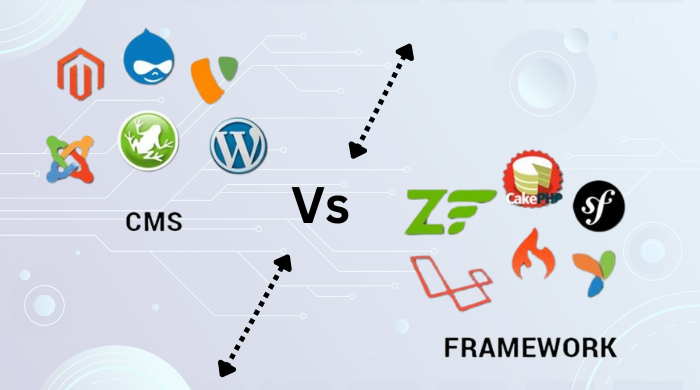
In the ever-evolving world of web development, two prominent approaches have gained significant traction: Content Management Systems (CMS) and Frameworks. While both serve the purpose of building websites and web applications, they differ in their core functionalities, underlying architectures, and suitability for various project requirements. In this article, we’ll explore the strengths and limitations of CMS Vs Framework approach, helping you determine which one aligns best with your web development goals. Content Management Systems (CMS) A Content Management System (CMS) is a software application designed to simplify the creation, management, and modification of digital content. CMSs are primarily used for building websites and blogs, enabling users with varying technical expertise to create, edit, and publish content without delving into the intricacies of coding. Popular examples of CMSs include WordPress, Joomla, Drupal, and Magento (for e-commerce). These platforms offer user-friendly interfaces, pre-built templates, and a vast ecosystem of plugins and extensions that extend their functionality. Advantages of Using a CMS: Ease of Use: CMSs provide a user-friendly interface, making it easier for non-technical users to manage website content. Content-Focused: CMSs are designed specifically for content management, making them ideal for websites and blogs that prioritize content creation and delivery. Extensibility: Many CMSs offer a wide range of plugins and extensions that can enhance functionality, from e-commerce capabilities to social media integration. Rapid Development: With pre-built templates and tools, CMSs enable faster website development compared to building from scratch. Limitations of CMSs: Limited Customization: While CMSs offer plugins and themes, extensive customization may require substantial coding or compromises in design and functionality. Performance Issues: As CMSs become more feature-rich, their performance can degrade, especially for large or complex websites. Security Concerns: Popular CMSs can be targets for hackers, requiring regular updates and security patches. Frameworks A web development framework is a collection of pre-written code, libraries, and tools that provide a structured environment for building web applications. Frameworks offer a solid foundation and a set of conventions that developers can leverage to streamline the development process. Popular examples of web development frameworks include React, Angular, Vue.js (for front-end development), Django, Ruby on Rails, and Laravel (for back-end development). Advantages of Using Frameworks: Increased Productivity: Frameworks provide a solid foundation and a set of conventions, reducing the need to reinvent the wheel and allowing developers to focus on building application-specific features. Scalability and Performance: Many frameworks are designed with scalability and performance in mind, enabling the development of large-scale, high-performance applications. Community Support: Popular frameworks often have active communities that contribute to their development, provide documentation, and offer support. Consistency and Maintainability: Frameworks promote consistent coding practices and architectural patterns, making it easier to maintain and scale applications over time. Limitations of Frameworks: Steep Learning Curve: Frameworks often require a significant learning curve, especially for developers new to the framework’s conventions and patterns. Vendor Lock-in: Adopting a specific framework can lead to vendor lock-in, making it difficult to switch to alternative solutions in the future. Potential Overhead: Frameworks can introduce overhead in terms of file size and performance, especially if not optimized or used efficiently. Limited Flexibility: While frameworks provide structure and conventions, they may also impose constraints on how applications are built, potentially limiting flexibility in certain scenarios. Choosing Between CMS and Frameworks The preference among a CMS and a framework in the end relies upon at the unique necessities of your concern project. Choose a CMS if: Your primary focus is on content creation and management (e.g., blogs, news websites, corporate websites). You need a user-friendly interface for non-technical users to manage content. You require a quick setup and deployment process. Your project has limited customization requirements or can be achieved through available plugins or extensions. Choose a Framework if: You’re building a complex web application with advanced functionality and custom features. Performance and scalability are critical requirements for your project. You have a team of experienced developers familiar with the framework’s conventions and patterns. Your project requires a high degree of customization and flexibility. You prioritize long-term maintainability and scalability over rapid initial development. It’s important to note that the decision between a CMS and a framework is not always an either-or scenario. In some cases, a hybrid approach can be adopted, where a CMS is used for content management, while a framework is integrated for building custom features or handling complex application logic. Ultimately, the choice between a CMS and a framework should be driven by a thorough understanding of your project requirements, available resources, and the specific strengths and limitations of each approach. By carefully evaluating your needs and aligning them with the appropriate solution, you can ensure a successful and efficient web development process.
Elevate Your Website Design with Parallax Scrolling in 2024

In the world of web design, creating a compelling and engaging user experience is crucial. With the ever-evolving landscape of technology, designers are constantly seeking innovative techniques to captivate their audience. One such technique that has gained significant traction in recent years is parallax scrolling. This visual effect, when implemented effectively, can enhance a website’s design and provide users with an immersive and memorable browsing experience. In this article, we shall discuss about how to elevate your website design with parallax scrolling. What is Parallax Scrolling? Parallax scrolling is a web design technique that creates a multi-layered scrolling effect, where background elements move at a different speed than foreground elements, creating a sense of depth and perspective. This effect mimics the way our eyes perceive objects at different distances in the real world, resulting in a more natural and visually appealing experience. Enhancing User Engagement One of the primary benefits of parallax scrolling is its ability to enhance user engagement. By introducing a sense of depth and movement, websites become more dynamic and interactive, capturing the user’s attention and encouraging them to explore further. This technique can be particularly effective for storytelling or highlighting key features, as it allows designers to guide the user’s focus and create a narrative flow. Creating Depth and Dimensionality Parallax scrolling adds an extra dimension to an otherwise flat website design. By utilizing multiple layers that move at varying speeds, designers can create a sense of depth and perspective, making the website feel more three-dimensional and immersive. This effect can be particularly powerful when combined with high-quality visuals, such as stunning photography or detailed illustrations, further enhancing the overall aesthetic appeal. Providing a Smooth Scrolling Experience One of the key advantages of parallax scrolling is its ability to provide a smooth and seamless scrolling experience. As users scroll through the content, the layered elements move in harmony, creating a fluid and visually pleasing transition. This smooth scrolling experience can contribute to a more enjoyable and engaging user journey, encouraging users to explore the website further. Highlighting Content and Storytelling Parallax scrolling can be an effective tool for highlighting specific content or conveying a narrative. By strategically placing elements on different layers and controlling their movement, designers can guide the user’s focus and create a storytelling experience. This technique is particularly useful for showcasing products, services, or brand stories in a visually compelling manner. Building Brand Identity and Memorability In today’s competitive digital landscape, standing out is crucial for businesses and brands. Parallax scrolling can help create a unique and memorable user experience that sets a website apart from its competitors. By incorporating this visually striking effect, brands can leave a lasting impression on their audience, contributing to brand recognition and recall. Responsive and Mobile-Friendly While parallax scrolling was initially designed for desktop experiences, modern web development techniques have made it possible to implement this effect seamlessly on mobile devices as well. With the rise of mobile usage, it’s essential for websites to be responsive and provide a consistent experience across various devices. Parallax scrolling, when implemented correctly, can enhance the mobile browsing experience and create a cohesive design across all platforms. However, it’s important to note that parallax scrolling should be used judiciously and in moderation. Overuse or improper implementation can lead to performance issues, slow load times, and a frustrating user experience. Designers should strike a balance between visual appeal and practicality, ensuring that the implementation of parallax scrolling enhances the overall user experience without compromising usability or accessibility. In conclusion, parallax scrolling is a powerful web design technique that offers numerous benefits, from enhancing user engagement and creating depth and dimensionality to providing a smooth scrolling experience and highlighting content in a visually compelling manner. When used effectively, it can help build brand identity, create memorable experiences, and set a website apart from competitors. As the web design landscape continues to evolve, techniques like parallax scrolling will play an increasingly important role in captivating and engaging audiences.
Why Shopify is the Best Ecommerce Platform for Building Your Online Store In 2024

As the world business website moving more towards ecommerce, having a strong online presence is crucial for businesses of all sizes. Whether you’re a small local shop or a large international brand, an ecommerce platform can help you reach customers, sell products, and grow your business. One of the most popular and powerful ecommerce platforms on the market today is Shopify. Shopify has become the first choice for businesses looking to build a professional, feature-rich online store. In this article, we’ll explore why Shopify is the best ecommerce platform for building your online store. Ease of Use Shopify’s intuitive drag-and-drop website builder makes it easy for even those with no coding or design experience to create a stunning online store. The platform’s clean and modern templates provide a solid foundation, while the customization options allow you to tailor the look and feel to your brand. Shopify’s admin dashboard is also incredibly straightforward and easy to navigate. From here, you can manage your product catalogue, process orders, track sales, and more – all without having to deal with the complexities of web development or server management. Robust Ecommerce Features Shopify was built from the ground up as an ecommerce platform, so it comes packed with a wide range of features specifically designed to support online sales. Some of the key ecommerce features included with Shopify are as they have Secure checkout with support for all major payment gateways, abandoned cart recovery to help recoup lost sales, Powerful inventory management tools, discounts, coupons, and gift cards, Seamless integration with shipping carriers, detailed sales and analytics reporting. These features, and many more, make it easy to run a professional, full-featured online store right out of the box. Scalability and Reliability As your business grows, you need an ecommerce platform that can scale to meet your needs. Shopify is built to handle high volumes of traffic and sales, with best possible uptime guarantee. The platform automatically handles server management, security updates, and backups, so you don’t have to worry about the technical side of running an online store. Shopify also offers a range of pricing plans to suit businesses of all sizes, from the Shopify Lite plan for small and new businesses, to the advanced Shopify Plus plan for the enterprise-level ecommerce. Extensive App Ecosystem One of the biggest advantages of the Shopify platform is its massive app ecosystem. Shopify’s App Store offers thousands of apps and integrations that allow you to extend the functionality of your online store. Whether you need to integrate your store with popular accounting software, implement an advanced loyalty program, or add customer reviews – there’s likely a Shopify app to help. This flexibility ensures you can build the exact ecommerce solution your business needs. Many of these apps are also developed by Shopify’s own team, ensuring a high level of quality and seamless integration. Multichannel Selling In today’s omnichannel retail landscape, it’s important to be able to sell your products across multiple platforms. Shopify makes this easy with its multichannel selling capabilities. Shopify integrates with popular marketplaces like Amazon and eBay allowing you to list and manage your products in these additional sales channels directly from your Shopify dashboard. You can also sell on Facebook, Instagram, and other social media platforms. This multichannel approach helps you reach more consumers and maximize your sales potential. Outstanding Support When you’re running an online business, issues can arise at any time. That’s why Shopify provides outstanding 24/7 support to help you troubleshoot problems and get your store back up and running. Shopify’s support team is highly knowledgeable and responsive, and they offer assistance via phone, email, and live chat. The platform’s extensive knowledge base and community forums also provide a wealth of self-help resources. Additionally, Shopify has a global network of expert Shopify Partners who can provide professional web development, design, and marketing services to help you get the most out of the platform. Conclusion In conclusion, Shopify is the best ecommerce platform for building your online store. With its ease of use, robust feature set, scalability, app ecosystem, multichannel selling capabilities, and outstanding support, Shopify provides everything you need to create a successful and profitable online business. If you’re looking to take your business online or upgrade your existing ecommerce presence, Shopify is the clear choice.
How to Dominate Search Results with Your Web Story in 2024

In today’s digital age, content is king, and web stories have become a popular format for delivering engaging and visually appealing content to audiences. However, creating a captivating web story is only half the battle; the other half is ensuring that it ranks well in search engine results, making it visible to your target audience. In this article, we’ll explore various strategies about how to dominate search results with your web story. Optimize for Featured Snippets Featured snippets are the concise answer boxes that appear at the top of search engine results pages (SERPs) for specific queries. Optimizing your web story for featured snippets can significantly improve its visibility and click-through rates. To achieve this, structure your content in a way that directly answers common questions related to your topic. Use clear and concise language, and format your content with headings and bullet points to make it easily scannable. Leverage Structured Data Structured data, also known as schema markup, is a code that helps search engines better understand the content on your website. By implementing structured data on your web story pages, you provide search engines with additional context about your content, making it easier for them to understand and rank your pages accurately. Additionally, structured data can enhance the appearance of your web story in search results, potentially leading to higher click-through rates. Focus on User Experience Search engines prioritize websites and content that provide an excellent user experience. When creating your web story, ensure that it loads quickly, is mobile-friendly, and offers a seamless browsing experience. Use high-quality visuals, engaging storytelling techniques, and responsive design principles to keep your audience engaged and encourage them to explore your content further. Optimize for Voice Search With the upward thrust of digital assistants and speakers, voice search users continue to increase in high volume. To rank well for voice searches, optimize your web story content for natural language queries and long-tail keywords. Additionally, consider incorporating frequently asked questions (FAQs) into your web story, as these tend to align well with voice search queries. Build High-Quality Backlinks Backlinks still a vital ranking factor to earn better online visibility in search engine. Earn high-quality backlinks from reputable and relevant websites by creating exceptional content and promoting it through outreach campaigns, guest blogging, and social media engagement. Additionally, encourage others to link to your web story by offering shareable resources, such as infographics, videos, or downloadable assets. Leverage Social Media Social media platforms can be powerful allies in your quest to rank your web story higher. Share your web story across multiple social media channels, encouraging your followers to engage with and share your content. This social engagement can signal to search engines that your content is valuable and relevant, potentially boosting its ranking. Conduct Keyword Research Effective keyword research is essential for ranking your web story. Identify relevant keywords and phrases that your target audience is likely to search for, and strategically incorporate them into your web story’s content, titles, headings, and metadata. However, keep away from key-word stuffing, as this may damage your rating and personal experience. Monitor and Analyze Performance Regularly monitor and analyze the performance of your web story using tools like Google Search Console and web analytics platforms. Identify areas for improvement, such as pages with high bounce rates or low engagement, and make necessary adjustments to enhance your web story’s ranking and user experience. Stay Up-to-Date with Search Engine Algorithm Updates Search engines like Google and Bing frequently update their algorithms to improve search results and combat manipulative practices. Stay informed about these updates and adjust your web story optimization strategies accordingly. Follow authoritative sources and industry experts to stay ahead of the curve. Embrace Continuous Improvement Ranking your web story higher in search results is an ongoing process that requires continuous effort and improvement. Regularly update your web story with fresh, relevant content, and experiment with different optimization techniques to find what works best for your audience and niche. By implementing these strategies, you can increase the visibility and discoverability of your web story, ultimately driving more traffic and engagement to your website. Remember, ranking well in search results is a marathon, not a sprint, so be patient, persistent, and committed to providing high-quality content and an exceptional user experience.
What desired skills are required for an aspiring web developer in 2024?
In today’s digital world, web development has become a vital skill in high demand. As more and more businesses and organizations establish an online presence, the need for skilled web developers continues to grow. But what desired skills are required for an aspiring web developer? Let’s have a deep insight at the key skills that web developers need to have in their toolkit: 1. Programming Languages and Frameworks At the core of web development is the ability to write clean, efficient code. Web developers need to be proficient in a variety of programming languages, such as HTML, CSS, JavaScript, PHP, Python, and Ruby. They should also be familiar with popular web development frameworks like React, Angular, Vue.js, Laravel, and Django, which can accelerate the development process and provide a structured approach. 2. Responsive Design In the mobile-first era, it’s critical for web developers to have a strong understanding of responsive design. This means being able to create websites and web applications that adapt seamlessly across different devices and screen sizes, providing an optimal user experience no matter how someone is accessing the content. 3. Database Management Many web applications require the ability to store, retrieve, and manipulate data. Web developers need to have database management skills, including knowledge of SQL (Structured Query Language) and experience working with relational databases like MySQL, PostgreSQL, or cloud-based options like Amazon RDS or Google Cloud SQL. 4. Version Control Effective web developers leverage version control systems like Git to manage changes to their codebase. This allows them to collaborate with other team members, track code changes, revert to previous versions if needed, and streamline the development workflow. 5. Testing and Debugging Web developers must be skilled in testing their code to identify and fix bugs or errors. This includes both manual testing and automated testing frameworks. They should also be adept at using browser developer tools and debuggers to diagnose and resolve issues in the front-end and back-end of an application. 6. User Experience (UX) Design While web developers may not be the ones designing the user interface, they need to have a strong understanding of UX principles. This includes elements like intuitive navigation, accessibility, responsiveness, and overall visual appeal. The ability to translate UX designs into functional, high-quality code is crucial. 7. Security As web applications handle sensitive user data and are exposed to potential cyber threats, web developers must prioritize security. This means implementing secure coding practices, understanding common vulnerabilities (e.g., cross-site scripting, SQL injection), and incorporating measures like encryption, input validation, and access controls. 8. Continuous Learning The world of web development is subject to transform new technologies; frameworks shape up the web developer learning culture. Successful web developers demonstrate a willingness to continuously learn and adapt. They stay up-to-date with industry trends, experiment with new tools and techniques, and are eager to expand their skillset. 9. Collaboration and Communication While web development is often a technical discipline, web developers must also possess strong communication and collaboration skills in order to convey strong message with another department. They need to be able to work effectively with designers, project managers, stakeholders, and other team members to understand requirements, provide updates, and deliver high-quality solutions. 10. Problem-Solving and Critical Thinking At the heart of web development is the ability to solve problems. Web developers need to be adept at breaking down complex issues, analysing data, identifying root causes, and implementing creative solutions. Critical thinking skills, creativity, and a methodical approach are essential. These are the key skills that web developers should strive to develop and refine. Of course, the specific skill set required may vary depending on the project, the organization, and the web developer’s role (e.g., front-end, back-end, full-stack). But mastering this core set of competencies will put web developers in a strong position to excel in their careers. As the demand for web development continues to grow, individuals with these skills will be well-positioned to take advantage of the numerous opportunities in this dynamic and rewarding field. Whether you’re just starting your journey in web development or looking to enhance your existing skillset, focusing on these essential abilities will help you become a more valuable and much improved web development professional.
How The Content Management System Revolution is Changing the Game in Online Publishing in 2024
In today’s digital age, content is always the king. Whether you’re a business, blogger, or organization, having a strong online presence with a website full of fresh, relevant content is crucial. However, building and maintaining a website from scratch can be a complex and time-consuming process, requiring knowledge of coding, design, and web development. Content management systems (CMS), a game-changing technology that has revolutionized the way we create, manage, and publish content online. A CMS is a software application that simplifies the process of creating, editing, organizing, and publishing digital content, making it accessible to users of all technical skill levels. At its core, a CMS provides a user-friendly interface that separates the content from the website’s design and functionality. This means that you can focus on creating and managing your content without worrying about the technical aspects of web development. The CMS handles the behind-the-scenes complexities, allowing you to seamlessly publish your content to your website with just a few clicks. One of the key features of a CMS is its ability to manage multiple users and assign different roles and permissions. This feature is particularly useful for organizations or teams where multiple people contribute to the website’s content. Administrators can grant specific access levels, ensuring that only authorized users can create, edit, or publish content, maintaining control and consistency across the website. CMSs also offer a wide range of built-in features that streamline the content creation and management process. These features include: 1. WYSIWYG (What You See Is What You Get) editors: These user-friendly editors allow you to create and format content in a similar word processing-like interface, without having much of coding knowledge. 2. Content scheduling: With content scheduling, you can plan and schedule your content to be published at a specific date and time, ensuring a consistent flow of fresh content. Versioning allows you to track changes made to your content, making it easy to revert to previous versions if needed. 3. Media management: Most CMSs provide robust media management tools, allowing you to upload, organize, and embed various types of media, such as images, videos, and documents, into your content. 4. Search engine optimization (SEO) : Many CMSs come equipped with built-in SEO tools that help you optimize your content for better search engine visibility and ranking. 5. Template and theme management: CMSs offer a wide range of pre-designed templates and themes that allow you to quickly and easily customize the look and feel of your website without delving into complex coding. 6. Plugin and extension ecosystems: Most popular CMSs have extensive plugin and extension ecosystems, providing additional functionality and features to enhance your website’s capabilities. One of the most vital aspects of using a CMS is its scalability. As your website grows and your content requirements evolve, a CMS can easily adapt to accommodate your changing needs. Whether you’re running a small personal blog or a large corporate website, a CMS can handle the workload and provide the tools you need to manage your content effectively. Additionally, many CMSs are open-source, which means that their source code is freely available and can be modified and customized by developers to meet specific requirements. This open-source nature foster a vibrant community of developers who contribute to the continuous improvement and enhancement of these systems. Popular examples of CMSs include WordPress, Joomla, Drupal, and Adobe Experience Manager. While each CMS has its own unique features and strengths, they all share the common goal of empowering users to create, manage, and publish content with ease. In conclusion, content management systems have revolutionized the way we approach web content creation and management. By providing a user-friendly interface, powerful tools, and scalable solutions, CMSs have democratized the web, enabling individuals and organizations of all sizes to establish and maintain a professional online presence without extensive technical expertise. As the digital landscape continues to evolve, CMSs will undoubtedly play a pivotal role in shaping the future of content creation and management.
Importance of Corporate Website Design in the Modern Business Landscape

Importance of Corporate Website Design in the Modern Business Landscape In today’s digital age, a well-designed corporate website is no longer a luxury – it’s an essential component of any successful business strategy. As the face of your company on the internet, your website serves as a virtual storefront, a marketing tool, and a crucial platform for engaging with customers and communicating your brand identity. Investing in professional corporate website design is paramount for establishing a strong online presence, enhancing credibility, and driving business growth. First Impression : Your website is mostly the first point of interaction between company and potential consumers. A appealing, user-friendly and responsive design creates awesome impression, builds confidence in your brand and encouraging visitors to explore further. Conversely, a poorly designed website can quickly turn away prospective clients, costing you valuable opportunities. Effective Brand Communication: Your corporate website is an extension of your brand identity. Through thoughtful design elements, such as color schemes, typography, and visual assets, you can effectively communicate your brand’s personality, values, and unique selling propositions. Consistent branding across all digital touchpoints reinforces recognition and fosters trust among your target audience. Brand management is crucial aspect of any organization. Compelling brands allows strong presence in market and open new pathway to future leads prospects in pipeline. Enhanced User Experience: In the competitive online landscape, user experience (UX) is king. A well-designed website ensures seamless navigation, intuitive information architecture, and optimized load times – all of which contribute to a positive user experience. By prioritizing UX, you not only increase visitor engagement and satisfaction but also improve your search engine rankings, as search algorithms favor user-friendly websites. Credibility and Professionalism: A professionally designed corporate website conveys credibility and professionalism. Customers are more likely to trust and do business with companies that have invested in a polished online presence. A visually appealing and well-structured website demonstrates your commitment to quality and attention to detail, setting you apart from competitors with atpar digital offerings. Lead Generation and Conversion: Ultimately, the success of your corporate website hinges on its ability to generate leads and convert visitors into customers. Strategic design elements, such as compelling calls-to-action, lead capture forms, and optimized conversion funnels, can significantly impact your lead generation and conversion rates. By aligning your website design with your marketing objectives, you can effectively nurture leads and drive tangible business results. Responsive and Mobile-Friendly Design: With the proliferation of mobile devices, it’s imperative that your corporate website is responsive and mobile-friendly. Google algorithm also gave priority on mobile friendly design as more searches are done from mobile devices rather than desktop. A responsive design ensures that your website fits to different screen sizes and devices, provides you with best user experience nevertheless , how visitors access your site. Failure to optimize for mobile can lead to high bounce rates and lost opportunities. Scalability and Future-Proofing: A well-designed corporate website should not only meet your current needs but also accommodate future growth and evolving trends. By investing in a scalable and adaptable design, you can easily integrate new features, functionalities, and content without compromising the user experience or requiring a complete overhaul. This future-proofing approach ensures that your website remains relevant and competitive in the ever-changing digital landscape. In the modern business world, your corporate website is a powerful tool that can either elevate or hinder your success. By prioritizing professional website design, you can effectively communicate your brand, enhance customer experiences, generate leads, and ultimately drive business growth. Neglecting the importance of corporate website design can put your company at a significant disadvantage, as potential customers may perceive a poorly designed website as a reflection of your overall business practices and commitment to quality.