
Website Development Cost in Brisbane
Creating a website is a crucial investment for any business in Brisbane, Australia. A well-designed and functional website can enhance your brand’s online presence, attract more customers, and increase revenue. However, understanding the cost of website development can be complex due to the numerous factors involved. As the best website designing company in Brisbane, CSS Founder will break down the various aspects that influence website development costs in Brisbane, helping you make informed decisions. 1. Type of Website The type of website you need significantly impacts the overall cost. Here are the common types of websites and their approximate cost ranges: 2. Design and User Experience A website’s design and user experience (UX) are critical components that influence its success. The cost of website design depends on factors such as: 3. Development and Functionality The development phase involves coding and implementing the design and functionality of your website. Costs can vary based on: 4. Additional Features Adding extra features to your website increases its functionality but also its cost. Common additional features include: 5. Maintenance and Support Ongoing maintenance and support are essential to keep your website running smoothly and securely. Annual maintenance costs for a website can range from AUD 500 to AUD 5,000, depending on the complexity of your website and the level of support required. 6. Agency vs. Freelancer Who you choose to develop your website also impacts the cost. Agencies typically charge more due to their expertise and resources, while freelancers may offer more competitive rates. However, working with an agency often ensures higher quality and reliability. Affordable website cost only at CSS Founder CSS Founder as a leading website designing company in Brisbane, Australia offers websites at a very affordable cost. CSS Founder was invented with the mission to provide “Website for everyone”. So it offers the best website design at a very affordable development cost. You may check out the top website designing companies in Brisbane to match the development cost and choose from them. I hope the CSS Founder will be the best of them. CSS Founder also offer website development cost calculator that offer you freedom to choose service and check their cost. It is totally free and their will not be any push notification to irritate you for website development. The basic purpose is to be transparent in website development cost and comparison. Conclusion The cost of website development in Brisbane varies widely based on your specific needs and the complexity of your project. By understanding the different factors involved, you can better plan your budget and ensure you get a website that meets your business objectives. Whether you’re looking for a simple informational site or a complex e-commerce platform, investing in a professional website is crucial for your business’s success in the digital age.If you need expert assistance with your website development project, CSS Founder in Brisbane is here to help. Contact us today for a personalised quote and take the first step towards creating a powerful online presence for your business.
Unveiling the Truth Behind Website Development Cost in Muscat

In today’s digital age, having a strong online presence is crucial for businesses of all sizes in Muscat, Oman. A well-designed website can serve as a powerful tool for attracting customers, showcasing products or services, and establishing credibility in the market. However, one of the primary concerns for many business owners and entrepreneurs is the cost associated with website development. This article aims to provide a comprehensive overview of website development costs in Muscat, helping you understand the factors that influence pricing and make informed decisions for your online projects. Cost Ranges for Different Website Types While prices can vary significantly based on specific requirements, here are approximate cost ranges for different types of websites in Muscat: Basic Informational Website (5-10 pages):Cost Range: 200-800 OMR Suitable for small businesses or personal websites with simple information and contact forms. Small Business Website (10-20 pages): Cost Range: 500-1,500 OMR Includes more pages, custom design elements, and basic functionality like contact forms and photo galleries. E-commerce Website: Cost Range: 1,000-5,000 OMR Varies greatly depending on the number of products, payment gateways, and additional features required. Custom Web Application: Cost Range: 3,000-15,000+ OMR For complex, tailor-made web applications with advanced functionality and integrations. Additional Costs to Consider When budgeting for website development in Muscat, keep in mind these additional costs: Domain Name: 5-20 OMR per year Web Hosting: 20-200 OMR per year, depending on your needs SSL Certificate: 20-100 OMR per year for enhanced security Content Creation: Varies based on the amount and type of content required Ongoing Maintenance: 50-500 OMR per month, depending on the complexity of your site Factors Influencing Website Development Costs Website Complexity: The complexity of your website is a crucial factor in determining its cost. A simple informational website with just a few pages, such as a basic company profile or a personal portfolio, will be at the lower end of the price spectrum. These sites typically have straightforward layouts and minimal interactive elements. On the other hand, complex e-commerce platforms or custom web applications can significantly increase costs. E-commerce sites require product catalogs, shopping carts, secure payment processing, and inventory management systems. Custom web applications might involve complex databases, user authentication systems, and tailored functionality specific to your business needs. The more intricate the site’s structure and features, the more time and expertise required for development, thus driving up the cost. Design Requirements: The design of your website plays a crucial role in both user experience and brand representation. Custom designs crafted specifically for your business can be more expensive as they require unique creative work and more development time. This includes creating bespoke layouts, color schemes, and graphic elements that align perfectly with your brand identity. Animations and interactive visual elements, while engaging for users, add another layer of complexity and cost. They require specialized skills in front-end development and often involve more testing to ensure smooth performance across different browsers and devices. Pre-made templates, on the other hand, offer a more cost-effective solution. These templates come with pre-designed layouts and styles, significantly reducing design and development time. However, they may limit your ability to create a unique visual identity or incorporate specific brand elements. Functionality: The features and functionalities of your website can greatly impact its development cost. Basic features like contact forms or simple galleries are relatively inexpensive to implement. However, more advanced functionalities can quickly increase the price. User registration and login systems require secure data handling and often involve email verification processes. Payment gateways for e-commerce sites need to be carefully integrated to ensure secure transactions, often requiring compliance with various financial regulations. Booking systems, whether for appointments, reservations, or events, involve complex date handling and often need to sync with external calendars or databases. Integration with third-party services, such as CRM systems, marketing tools, or social media platforms, requires additional development work to ensure smooth data flow between systems. Each of these functionalities not only increases the initial development cost but also often requires ongoing maintenance and updates. Content Management System (CMS): The choice of CMS can significantly impact both the development process and the final cost of your website. Popular open-source CMS platforms like WordPress or Drupal can often reduce initial development costs. These systems come with a wide range of pre-built themes and plugins, which can speed up development. However, extensive customization of these platforms to meet specific needs can sometimes be more time-consuming than building from scratch. Drupal, for instance, is known for its robustness and scalability but often requires more specialized developer skills, potentially increasing costs. On the other hand, a custom-built CMS tailored to your specific needs can offer maximum flexibility and efficiency in the long run, but it typically involves higher upfront development costs. The choice of CMS also affects ongoing maintenance costs and the ease with which you can update your site in the future. Responsive Design: In today’s mobile-first world, responsive design is not just an option but a necessity. A responsive website automatically adjusts its layout and functionality to provide an optimal viewing experience across a wide range of devices, from desktop computers to smartphones and tablets. Implementing responsive design requires additional planning and development work. Developers need to create flexible layouts, adjust images and media for different screen sizes, and ensure that all functionalities work seamlessly on touch screens. This often involves more testing across various devices and browsers, which can increase development time and cost. However, the investment in responsive design is crucial for providing a good user experience and is also important for search engine optimization, as search engines like Google prioritize mobile-friendly websites. SEO Optimization: Search Engine Optimization (SEO) is crucial for ensuring your website is visible to potential customers through search engines. Implementing effective SEO strategies during the development phase can save time and resources in the long run. This includes optimizing the website’s structure and URLs for search engines, implementing proper header tags, creating XML sitemaps, and ensuring fast loading times. On-page SEO elements like
Website Development Cost in Columbus

In today’s digital age, having a strong online presence is crucial for businesses of all sizes. For companies in Columbus, Ohio, investing in a well designed website can be a game changer. However, one of the most common questions that arise when considering website development is: “How much will it cost?” This article aims to provide a detailed overview of website development costs in Columbus, helping you understand the factors that influence pricing and what to expect when budgeting for your project. Cost Ranges for Website Development in Columbus Website development costs in Columbus can vary widely depending on the project scope and the service provider. Here’s a general breakdown of what you might expect: Basic Informational Websites: $1,000 $5,000 These simple sites typically include a home page, about page, services or products page, and contact information. They’re often built using templates or basic custom designs. Small Business Websites: $5,000 $15,000 These sites offer more pages, custom design elements, and basic functionality like contact forms or simple booking systems. They may also include basic SEO optimization and mobile responsiveness. Midsized Business Websites: $15,000 $30,000 These more complex sites often feature custom designs, advanced functionality, content management systems, and ecommerce capabilities for businesses with larger product catalogs. Large Business or Ecommerce Websites: $30,000 $75,000+ Highend websites for larger corporations or complex ecommerce platforms fall into this category. They often include advanced features, integrations with other business systems, and sophisticated designs. Custom Web Applications: $50,000 $250,000+ Highly specialized web applications with unique functionality, such as booking systems, member portals, or industry specific tools, can command premium prices due to their complexity and customization. Factors Affecting Website Development Costs Website Complexity: The complexity of a website is a major factor in determining its cost. A simple informational site with a few static pages will be less expensive to develop compared to more complex projects. Ecommerce platforms require additional features like product catalogs, shopping carts, and payment gateways, which increase development time and cost. Custom web applications with unique functionalities, database integrations, and complex user interactions are typically the most expensive to develop due to their bespoke nature and the specialized skills required. Design Requirements: The design of a website significantly impacts its cost. Templatebased designs, which use premade themes or layouts, are generally less expensive as they require less custom work. However, they may limit uniqueness and brand alignment. Custom designs, created from scratch to match a specific brand vision, require more time and expertise, thus increasing costs. The level of design sophistication, such as advanced animations, unique layouts, or interactive elements, will further impact the price. Highend designs with meticulous attention to detail and user experience will be at the higher end of the cost spectrum. Functionality: The features and functionalities of a website can greatly affect its development cost. Basic features like contact forms or simple search functionality are relatively inexpensive to implement. However, more advanced features can significantly increase costs: User accounts and authentication systems Advanced search capabilities with filters and sorting options Integration with thirdparty services (e.g., CRM systems, payment gateways, social media platforms) Custom calculators or interactive tools Membership areas with restricted content Multilanguage support Advanced analytics and reporting features Each additional feature requires development time, testing, and often ongoing maintenance, all of which contribute to the overall cost. Content Management System (CMS): The choice of CMS can have both shortterm and longterm cost implications: Opensource CMS like WordPress or Drupal can reduce initial development costs but may require more customization for complex sites. Proprietary CMS solutions might have higher upfront costs but could offer more tailored features and potentially lower longterm maintenance costs. Custombuilt CMS solutions are typically the most expensive option but provide the highest level of customization and control. Headless CMS options are becoming popular for their flexibility but may require more specialized development skills. The choice of CMS also affects ongoing costs such as hosting, security updates, and maintenance. Responsive Design: Responsive design ensures that a website functions well and looks good on all devices, from desktop computers to smartphones. While it’s now considered standard practice, implementing responsive design does add to development costs: It requires additional design work to create layouts for different screen sizes. Development time increases as the site needs to be built and tested across multiple devices and browsers. More complex responsive designs, such as those with adaptive content or advanced mobile features, will further increase costs. Ecommerce Capabilities: Implementing ecommerce functionality significantly increases website complexity and cost. Key elements that contribute to ecommerce costs include: Product catalog management systems Shopping cart functionality Secure payment gateway integrations Order processing and management systems Inventory tracking and management Customer account features Tax and shipping calculations Security measures for handling sensitive customer data The scale of the ecommerce operation (number of products, transaction volume, etc.) will also impact the overall cost. SEO and Marketing Features: Incorporating SEO best practices and marketing tools during the development phase can increase initial costs but may lead to better performance and ROI in the long run. This might include: SEOfriendly URL structures XML sitemap generation Schema markup implementation Integration with Google Analytics and other tracking tools Social media integration Email marketing system connections Blog or news section functionality Landing page templates for marketing campaigns The depth of SEO and marketing feature integration will affect the overall development cost. Developer Expertise: The expertise level of the developers or agency hired for the project significantly impacts cost: Junior developers or offshore teams may offer lower rates but might require more time or oversight. Experienced developers and reputable agencies typically charge higher rates but can often complete projects more efficiently and with higher quality. Specialized expertise (e.g., in certain industries or technologies) usually commands premium rates. The location of the development team also affects costs, with rates varying significantly between different countries and regions. Higher expertise often translates to better code quality, improved security, and more efficient problem solving, which can lead to lower longterm maintenance
Website Development Cost in Australia: A Comprehensive Guide

In today’s digital age, having a strong online presence is crucial for businesses of all sizes. A well-designed website can be a powerful tool for attracting customers, showcasing products or services, and driving growth. However, one of the first questions that comes to mind when considering a new website is: “How much will it cost?” This article aims to provide a detailed overview of website development costs in Australia, helping you understand the factors that influence pricing and what to expect when budgeting for your project. Cost Ranges for Different Website Types While costs can vary widely, here are some general price ranges for different types of websites in Australia: Basic Informational Website (5-10 pages): – Cost Range: AUD 2,000 – AUD 8,000 Ideal for small businesses or personal sites Typically uses pre-made templates with some customization Small Business Website (10-20 pages):Cost Range: AUD 5,000 – AUD 15,000 Includes more custom design elements and basic functionality May include a simple content management system Corporate Website (20-50 pages): Cost Range: AUD 10,000 – AUD 30,000 Features custom design, more complex functionality, and advanced content management May include features like team member profiles, blog integration, and multi-language support E-commerce Website: Cost Range: AUD 15,000 – AUD 100,000+ Varies greatly depending on the number of products and complexity of features Includes product management, payment gateway integration, and often custom design Custom Web Application: Cost Range: AUD 30,000 – AUD 250,000+ Highly variable based on complexity and specific requirements Involves custom development, unique features, and often integrates with other systems Using pre-made templates with minimal customization. Design Requirements: Template-based design: AUD 1,000 – AUD 5,000 Custom design: AUD 5,000 – AUD 20,000+ Involves creating a unique look and feel, often with brand-specific elements and user experience considerations. Factors Affecting Website Development Costs Several key factors contribute to the overall cost of website development in Australia: Website Complexity: The more complex your website, the higher the cost. A simple brochure-style site will be less expensive than an e-commerce platform with hundreds of products. Design Requirements: Custom designs are more costly than template-based solutions. The level of uniqueness and sophistication in your design will impact the price. Functionality: Advanced features like user accounts, payment gateways, or custom applications will increase development costs. Content Management System (CMS): The choice of CMS (e.g., WordPress, Drupal, or a custom solution) can affect both initial development costs and ongoing maintenance expenses. Responsive Design: Ensuring your website works well on all devices is standard practice but may add to the overall cost. SEO Optimization: Initial search engine optimization can be included in the development process, affecting the final price. Content Creation: If you need help with copywriting, photography, or video production, these services will add to the total cost. Developer Expertise: More experienced developers typically charge higher rates but may deliver better quality and efficiency. Additional Costs to Consider When budgeting for website development, it’s important to factor in these additional costs: Domain Name: AUD 10 – AUD 50 per year Web Hosting: AUD 100 – AUD 1,000+ per year, depending on your needs SSL Certificate: AUD 0 – AUD 200+ per year (some hosts offer free certificates) Ongoing Maintenance: AUD 500 – AUD 5,000+ per year Content Updates: Varies based on frequency and complexity Marketing and SEO: Can range from a few hundred to thousands of dollars per month Choosing the Right Development Partner Selecting the right web development partner is crucial for the success of your project. Consider the following when making your choice: Experience: Look for developers with a strong portfolio in your industry or similar project types. Technical Expertise: Ensure they have experience with the technologies your project requires. Communication: Choose a partner who communicates clearly and understands your vision. Support: Consider their ability to provide ongoing support and maintenance. Pricing Structure: Understand their pricing model (fixed price, hourly rate, or retainer) and what’s included. Tips for Managing Costs To keep your website development costs under control: Clearly define your requirements before approaching developers. Prioritize features and consider a phased approach to development. Choose a scalable solution that can grow with your business. Consider open-source platforms to reduce licensing costs. Provide your own content to reduce copywriting expenses. Invest in quality development to avoid costly fixes later. Conclusion Website development costs in Australia can vary significantly based on your specific needs and the complexity of your project. While it’s possible to create a basic website for a few thousand dollars, more complex projects can easily run into tens of thousands or even hundreds of thousands of dollars. By understanding the factors that influence costs and carefully planning your project, you can make informed decisions that balance your budget with your business needs. Remember that your website is an investment in your business’s future. A well-designed, functional website can provide significant returns through increased visibility, customer engagement, and sales. Take the time to research your options, clearly define your requirements, and choose a development partner who can bring your vision to life within your budget.
CMS vs Frameworks: Which One is Best for Web Development in 2024?
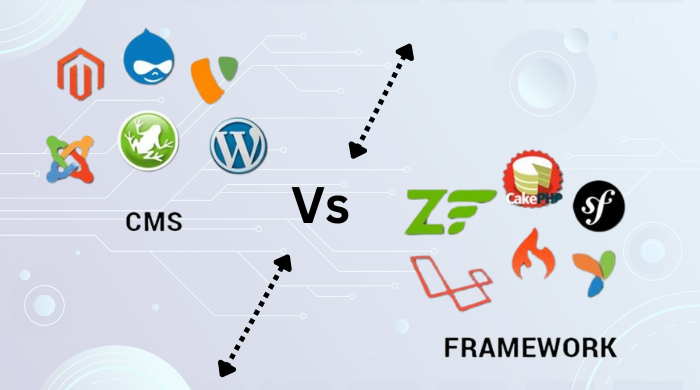
In the ever-evolving world of web development, two prominent approaches have gained significant traction: Content Management Systems (CMS) and Frameworks. While both serve the purpose of building websites and web applications, they differ in their core functionalities, underlying architectures, and suitability for various project requirements. In this article, we’ll explore the strengths and limitations of CMS Vs Framework approach, helping you determine which one aligns best with your web development goals. Content Management Systems (CMS) A Content Management System (CMS) is a software application designed to simplify the creation, management, and modification of digital content. CMSs are primarily used for building websites and blogs, enabling users with varying technical expertise to create, edit, and publish content without delving into the intricacies of coding. Popular examples of CMSs include WordPress, Joomla, Drupal, and Magento (for e-commerce). These platforms offer user-friendly interfaces, pre-built templates, and a vast ecosystem of plugins and extensions that extend their functionality. Advantages of Using a CMS: Ease of Use: CMSs provide a user-friendly interface, making it easier for non-technical users to manage website content. Content-Focused: CMSs are designed specifically for content management, making them ideal for websites and blogs that prioritize content creation and delivery. Extensibility: Many CMSs offer a wide range of plugins and extensions that can enhance functionality, from e-commerce capabilities to social media integration. Rapid Development: With pre-built templates and tools, CMSs enable faster website development compared to building from scratch. Limitations of CMSs: Limited Customization: While CMSs offer plugins and themes, extensive customization may require substantial coding or compromises in design and functionality. Performance Issues: As CMSs become more feature-rich, their performance can degrade, especially for large or complex websites. Security Concerns: Popular CMSs can be targets for hackers, requiring regular updates and security patches. Frameworks A web development framework is a collection of pre-written code, libraries, and tools that provide a structured environment for building web applications. Frameworks offer a solid foundation and a set of conventions that developers can leverage to streamline the development process. Popular examples of web development frameworks include React, Angular, Vue.js (for front-end development), Django, Ruby on Rails, and Laravel (for back-end development). Advantages of Using Frameworks: Increased Productivity: Frameworks provide a solid foundation and a set of conventions, reducing the need to reinvent the wheel and allowing developers to focus on building application-specific features. Scalability and Performance: Many frameworks are designed with scalability and performance in mind, enabling the development of large-scale, high-performance applications. Community Support: Popular frameworks often have active communities that contribute to their development, provide documentation, and offer support. Consistency and Maintainability: Frameworks promote consistent coding practices and architectural patterns, making it easier to maintain and scale applications over time. Limitations of Frameworks: Steep Learning Curve: Frameworks often require a significant learning curve, especially for developers new to the framework’s conventions and patterns. Vendor Lock-in: Adopting a specific framework can lead to vendor lock-in, making it difficult to switch to alternative solutions in the future. Potential Overhead: Frameworks can introduce overhead in terms of file size and performance, especially if not optimized or used efficiently. Limited Flexibility: While frameworks provide structure and conventions, they may also impose constraints on how applications are built, potentially limiting flexibility in certain scenarios. Choosing Between CMS and Frameworks The preference among a CMS and a framework in the end relies upon at the unique necessities of your concern project. Choose a CMS if: Your primary focus is on content creation and management (e.g., blogs, news websites, corporate websites). You need a user-friendly interface for non-technical users to manage content. You require a quick setup and deployment process. Your project has limited customization requirements or can be achieved through available plugins or extensions. Choose a Framework if: You’re building a complex web application with advanced functionality and custom features. Performance and scalability are critical requirements for your project. You have a team of experienced developers familiar with the framework’s conventions and patterns. Your project requires a high degree of customization and flexibility. You prioritize long-term maintainability and scalability over rapid initial development. It’s important to note that the decision between a CMS and a framework is not always an either-or scenario. In some cases, a hybrid approach can be adopted, where a CMS is used for content management, while a framework is integrated for building custom features or handling complex application logic. Ultimately, the choice between a CMS and a framework should be driven by a thorough understanding of your project requirements, available resources, and the specific strengths and limitations of each approach. By carefully evaluating your needs and aligning them with the appropriate solution, you can ensure a successful and efficient web development process.
Custom website development cost

Custom website development is the process of developing a one-of-a-kind, personalised website that is suited to the particular requirements and objectives of a company or organisation. This can involve integration with certain tools and systems, integration with unique functionality, and special design components. When creating a custom web design in Delhi, the development team and the business frequently work together in a collaborative process where the business offers suggestions and feedback on the website’s appearance and functionality. The development team then constructs the website from the ground up, combining design, programming, and content creation expertise to provide a site that adheres to the particular needs of the company. The cost of creating a custom website can be more than the cost of using pre-made templates or inexpensive website builders. But the final product is frequently a better-looking, more useful website that offers a better online presence and user experience. Custom website creation might be a wise investment for companies with intricate requirements or definite objectives. How much custom website development cost in India The intricacy of the website, the necessary design and functionality, and the experience and expertise of the development team can all have a significant impact on the price of custom website creation in India. Here are some rough estimates to give you an idea for the custom website development cost in India: Simple brochure-style websites: Depending on the extent of customisation and design required, prices can range from $500 to $2,000 or more. E-commerce websites: Depending on the intricacy of the site and the number of features needed, these websites can cost anywhere from $5,000 to $50,000 or more. Complex custom sites: Depending on the complexity of the design and functionality, as well as the level of knowledge and experience of the development team, this type of site can cost up to $50,000 or more. These are merely ballpark figures; the actual price of developing a bespoke website in India would depend on the particular needs and objectives of the company. Before making a choice, it is usually a good idea to compare specific quotations from several vendors and conduct in-depth research on potential development teams. Benefit of custom website development The following are a few advantages of developing a custom website: Specialized functionality and design: Custom website development enables companies to design a one-of-a-kind, personalised website that is suited to their particular requirements and objectives. This could lead to the creation of a website that is more user-friendly, engaging, and accurately represents the company’s brand and core values. Improved user experience: Custom website creation can lead to a site that is more accessible, intuitive, and user-friendly, giving users a better experience. Greater functionality: By using a bespoke website design, businesses may give their website additional features like personalised forms, tool integrations, and personalised data management systems. Better performance: Custom website development frequently produces a quicker, more effective website with faster load times. Improved search engine optimization: A custom website can be developed that is search engine optimised, increasing the site’s visibility and ranking in search results. Improved security: When developing a custom website, security measures can be strengthened to protect critical information and thwart hackers and other security risks. Greater scalability: A custom website may be made to be scalable, enabling organisations to quickly add new features and capabilities as they expand and change. A higher quality, more effective website that offers a better online presence and user experience can be produced by using custom website creation. Although it may be more expensive than alternative website building solutions, the investment may be worthwhile because it offers a higher rate of return. Is it good to choose custom website development The specific needs and objectives of the business will determine whether it is a good idea to pick bespoke website creation. Here are some things to think about: Complexity: If a company’s needs or objectives are complex or call for specialised design and functionality, custom website creation may be the best choice. Cost: Compared to alternative solutions, such as pre-made templates or inexpensive website builders, custom website development can be more expensive. When choosing a choice, businesses should carefully examine their budget. User experience: A custom website may be made to be more user-friendly and interesting, giving visitors a better overall experience. Brand and values: enable companies to build a website that more accurately represents their brand and values, assisting in building a solid online presence. Scalability and growth: A scalable website may be created through custom website creation, enabling organisations to quickly add new features and capabilities as they expand and change. In general, organisations that have complex requirements or particular objectives, as well as those who wish to build a strong online presence and improve the user experience for visitors, may find that bespoke website development is a smart option. However, before making a choice, businesses should carefully examine their budget and particular needs.
Is website development a good career ?

Are you fresher and looking to build your career in website development? Thinking about website development is a good career or not? Well, yes, it is but, it depends on what you’re looking for your career. There are many qualities of website development career that can be considered to make it as a great option for anyone or not. Website development career qualities Opting for any career you must have to carefully observe all the qualities. Let us see each of them to know is website development a good career or not. Job Availability There’s a dire shortage of skilled tech savvy and website developers and are among the most in-demand professional, especially creative and skilled website developers. Due to increasing need for the companies to improve their visibility online they are demanding for website developers making website development a good career. Base Salary Web development is a high paying job. The metropolitan areas pay the highest salary to the website designers in Delhi, Mumbai, Bangaluru, all over the world. The salary is based on the experience and expertise level like every other industry, significantly website developers earn higher than other professionals. Flexibility Website development is an industry that offers work flexibility. You can work full-time, part-time, or as a freelancer to earn income through a side hustle while nurturing other opportunities. Reason to choose website development Getting appreciated for your work, finding opportunities to grow and learn, job satisfaction, security and pay scale are primary benefits that you can get in website development career. Website development is in Demand Today, tech savvy with experience are the most demanded professionals. Online experience has become essential for every business to get success and organized. Without website developer, companies can’t get their strong online presence and though website developers are high in demand. While many companies don’t relay on freelancer are trust website design company or team of website developers to deliver their project with a unique and engaging experience that become one of the best reasons for making website development a good career. Website development offer great earning Website developers paid well and this industry offer a lot of perks as well. Getting into website development is one way for Hoosiers to make double earning without any advanced degree. If you are looking to switch you career into website development then you need to groom your skills only with a lot of practice only. without requiring to do any degree or course to get your job in website development. Offers diverse opportunities Many industry offer opportunities but when you look into website development career then you can see a wide range of opportunities open to you for starting your career. You can get expertise in website development and designing or you might get experience to develop full website development project with other exiting tech careers. Flexible working hours Website development is a good career that offer flexible way to complete your task. You can work as an employee or as a freelancer. You are not required to visit office physically; you can start your work with the comfort of your home as well. How to become a website developer? For choosing website development career you don’t necessarily need any college degree, although some employer prefers website developers with a bachelor’s degree. But majority of the companies are focusing on your skills and expertise that how far you are able to demonstrate your work. You can train yourself by working on different self-projects and can participate in hackathon to get competitive experience. The employer mainly see the website developers skill set through their portfolios only.
How much does a new website design cost?

A basic design for a website cost between 1000 to 10,000. It gives your business a straightforward yet compelling site. Like moderate and progressed website architecture, essential website composition makes a site explicit to your image and objectives. In case you’re a private company or startup, basic Website Designing Company in Delhi offers a savvy choice. It gives your organization a valid, easy to use site that can begin driving buys, quote demands, calls, and then some. Following are the features that influence the cost: Site Size Copywriting Style SEO Responsive Design CMS Integration Ecommerce Functionality Database Integration Domain Name SSL Certificate Site Hosting Service A full-administration organization can enhance duplicate that catches your image, item highlights, and extraordinary selling focuses. What is streamlined duplicate, however? It’s the substance that objectives keywords pertinent to your business and target crowd. Regardless kind of style you’re searching for, from easy to top of the line, it’s important that your office makes a site that catches your image, just as it gives a natural and consistent experience for customers. How do the features influence the cost? Regardless of whether your organization works disconnected or on the web, it’s basic to have an online presence. A site permits you to associate with more than 55% of the total populace — which implies the Internet gives your business helpful admittance to your intended interest group. If your site doesn’t pass on believability or highlights helpless ease of use, that drives clients from your site. At the point when that occurs, your transformation rates — and your benefits — drop. That is the reason website design is so basic. It can assist your organization with keeping up with your change rates, just as increment them. It’s fundamental, in any case, to collaborate with a Website Design Company in Mumbai office that focuses on your ROI. This means your organization centers around the appearance and usefulness of your site, so it conveys the ideal return and UX. On the off chance that your site looks unappealing or obsolete, your audience will promptly have a bad introduction to your business. They will not discover your site engaging, which deflects them from your page. You’ll pass up leads since they’ll leave your page for a rival’s page. Website design is significant because it impacts how your crowd sees your image. The impression you make on them can either get them to stay on your page and find out about your business or pass on your page and go to a contender. A decent website design assists you with keeping your leads on your page.