
Understanding the Cost of Web Design: What to Expect
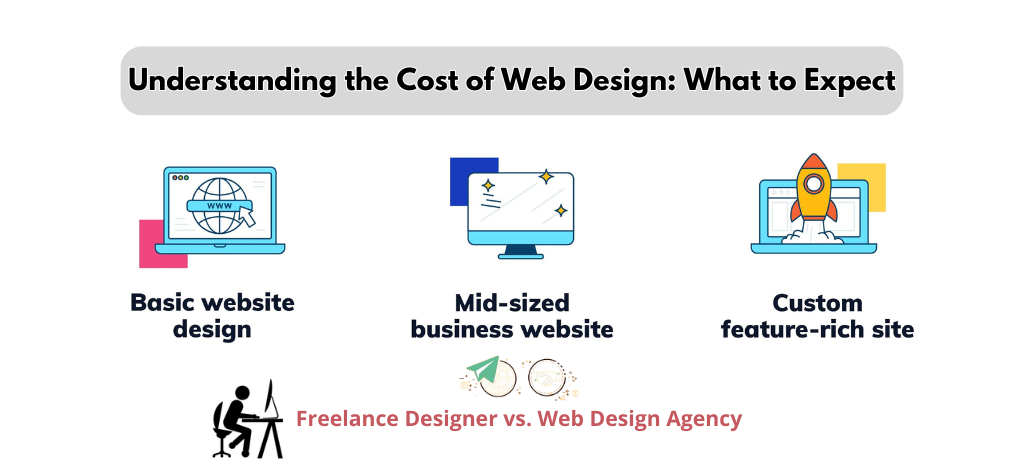
Creating a professional, user-friendly website is crucial for businesses in the digital age. However, the cost of web design can be a significant investment, and it’s essential to understand the various factors that influence these costs. This article explores the different elements that affect web design pricing, compares hiring a freelance designer versus a web design agency, and provides tips for setting a realistic budget. Factors Influencing Web Design Costs 1. Website Complexity The complexity of a website is one of the most significant factors affecting its cost. Here’s a breakdown: Simple Websites: These typically have a few pages like Home, About, Services, and Contact. They offer basic functionality, such as simple navigation and contact forms. These websites usually cost between $1,000 and $5,000. Medium Complexity Websites: These might include more pages and features like blogs, image galleries, or interactive elements like forms and forums. They generally range from $5,000 to $20,000. Complex Websites: Examples include e-commerce sites with product listings, custom databases, and user accounts. These websites can start at $20,000 and go well beyond $100,000 due to the advanced features and functionalities required. 2. Design Customization Design customization enhances user experience and aligns the website with your brand identity, but it comes at a higher cost. Template-Based Designs: Using pre-designed templates is cost-effective, usually between $500 and $2,000. However, these may lack uniqueness and specific brand alignment. Fully Custom Designs: These are tailored to your specific needs and brand, providing a unique and professional look. Custom designs typically range from $3,000 to $10,000 or more, depending on the complexity and level of detail. 3. E-commerce Functionality Adding e-commerce functionality significantly impacts the cost due to the complexity involved in setting up product pages, payment gateways, and security features. Basic E-commerce: This includes simple product listings and standard checkout processes. It can range from $5,000 to $20,000. Advanced E-commerce: This includes custom features like user accounts, advanced search filters, and integrated inventory management systems. Costs can exceed $20,000, depending on the complexity. 4. Responsive and Mobile-First Design With a large portion of web traffic coming from mobile devices, having a responsive design is essential. Responsive Design: Ensuring your site looks and works well on all devices typically adds $2,000 to $5,000 to the cost. Mobile-First Design: Prioritizing mobile usability may require a higher initial investment but offers better long-term benefits, such as improved user experience and SEO rankings. 5. Content Creation and Management High-quality content is critical for user engagement and SEO. Professional Copywriting: This can range from $50 to $500 per page, depending on the complexity and length. Photography and Videography: Custom multimedia elements can significantly increase costs but are important for creating a visually appealing site. 6. SEO and Digital Marketing Integration Effective SEO and digital marketing strategies are crucial for attracting traffic to your website. Basic SEO: This includes keyword research, on-page SEO, and basic analytics integration, costing between $500 and $5,000. Advanced SEO and Marketing: Ongoing services, such as content marketing and PPC campaigns, can range from $1,000 to $10,000 per month, depending on the scope and goals. Freelance Designer vs. Web Design Agency When deciding between a freelance designer and a web design agency, consider the following: Freelance Designer Cost: Generally lower, ranging from $50 to $150 per hour. Flexibility: Freelancers are often more flexible in terms of working hours and project scope. Personal Touch: They can provide a more personalized service but may lack the breadth of expertise and resources. Web Design Agency Cost: Higher, typically between $100 to $300 per hour. Comprehensive Services: Agencies offer a full range of services, including project management, design, development, and marketing. Team Expertise: Agencies have diverse teams of specialists, which can result in a more polished final product. Ongoing Costs: Maintenance and Updates Maintaining a website involves ongoing costs for updates, security patches, and content management. Basic Maintenance: Typically ranges from $500 to $2,000 per year. This includes updates to keep the site running smoothly and securely. Advanced Maintenance: This includes regular updates, security monitoring, and adding new features, ranging from $2,000 to $10,000 per year. Tips for Setting a Realistic Budget Define Your Goals: Clearly outline what you need from your website. Identify must-have features versus optional ones to prioritize your budget effectively. Research: Get multiple quotes from different designers and agencies. Ensure you understand what each quote includes to make a fair comparison. Plan for the Future: Consider long-term needs, including maintenance and potential expansions, to avoid unexpected costs later. Invest in Quality: While it might be tempting to cut costs, investing in a high-quality website is a long-term investment that can drive business growth. Finding the Right Web Design Service To find the right web design service, consider the following: Portfolio Review: Look at previous work to ensure the designer or agency aligns with your vision and style. Client Testimonials: Seek feedback from past clients to gauge reliability, quality, and customer satisfaction. Communication: Ensure the service provider understands your goals and can effectively communicate throughout the project. Conclusion Investing in web design is a crucial step for any business looking to establish a strong online presence. By understanding the factors that influence costs, comparing different service providers, and setting a realistic budget, you can make informed decisions that align with your business goals. Whether you choose a freelance designer or a web design agency, prioritize quality and long-term benefits to ensure your website is a valuable asset to your business. For businesses in Chicago looking for top-notch web design services, consider CSS Founder, which is the best website design company in Chicago. With our expertise and dedication, we can help you create a stunning and effective online presence tailored to your needs.
Mastering the 8 Best Pay Per Click Strategies for 2024

In the rapidly changing digital marketing arena, pay-per-click (PPC) advertising remains a pivotal strategy for businesses seeking to drive targeted traffic, increase brand visibility, and ultimately boost conversions and sales. As we approach 2024, the PPC landscape is poised to undergo significant transformations, influenced by emerging technologies, evolving consumer behaviors, and shifting market dynamics. To stay ahead of the curve and maximize the impact of their PPC campaigns, businesses must proactively adapt their strategies and embrace these impending changes. Here are the eight best pay-per-click strategies to consider in 2024, along with detailed insights and actionable steps to ensure success. Embrace Automation and Machine Learning Artificial intelligence (AI) and machine learning are revolutionizing the way PPC campaigns are managed, offering unprecedented opportunities for optimization and efficiency. In 2024, leveraging these technologies will be crucial for gaining a competitive edge. Businesses should adopt AI-powered tools that can analyze vast amounts of data, identify patterns, and make real-time adjustments to ad targeting, bidding strategies, and campaign performance. By harnessing the power of machine learning, businesses can ensure their campaigns are delivering the best possible results, maximizing return on investment (ROI) and staying ahead of the competition. Prioritize Mobile Optimization With the continued proliferation of mobile devices, ensuring that PPC campaigns are optimized for mobile users will be a non-negotiable priority in 2024. This includes creating mobile-friendly ad copy that is concise and impactful, utilizing click-to-call extensions to facilitate direct connections with potential customers, and leveraging location-based targeting to reach users on the go with hyper-relevant messaging. Additionally, businesses should prioritize mobile-responsive landing pages and streamlined conversion funnels to enhance the user experience and drive higher conversion rates. Capitalize on Voice Search Voice search has been steadily gaining traction, and by 2024, it is expected to become a mainstream component of the search landscape. Businesses that fail to adapt their PPC strategies accordingly risk missing out on a significant opportunity to reach potential customers. In 2024, optimizing ad copy and landing pages for voice search queries will be crucial. This includes incorporating natural language and conversational phrasing, as well as targeting long-tail keywords that align with how users phrase voice searches. Leverage Video Advertising Video content has become a dominant force in the online landscape, and PPC video advertising presents a powerful opportunity to engage audiences and drive conversions. In 2024, businesses should explore video ad formats on platforms like YouTube, social media, and connected TV (CTV) to reach their target audiences more effectively. Video ads can showcase products, services, or brand stories in an engaging and immersive manner, capturing viewers’ attention and driving them further down the marketing funnel. Personalize Ad Experiences Consumers increasingly expect personalized and relevant experiences, and PPC advertising is no exception. In 2024, businesses should leverage data-driven insights to create highly targeted ad campaigns tailored to specific audience segments. This includes leveraging advanced audience targeting capabilities, such as demographic, behavioral, and interest-based targeting, as well as dynamic ad customization based on user data. By delivering personalized and relevant ad experiences, businesses can increase the likelihood of resonating with potential customers and driving conversions. Expand into Emerging Advertising Channels While traditional PPC platforms like Google Ads and Microsoft Advertising will remain important, businesses should also explore emerging advertising channels in 2024. This could include advertising on newer platforms like TikTok, which has seen explosive growth in recent years, as well as connected TV (CTV) and voice assistants like Amazon’s Alexa and Google Assistant. By diversifying their PPC efforts across these emerging channels, businesses can reach new audiences, stay ahead of the competition, and capitalize on emerging consumer trends. Prioritize Remarketing Strategies Remarketing campaigns, which target users who have previously interacted with a brand’s website or ads, can be highly effective in nurturing leads and driving conversions. In 2024, businesses should prioritize remarketing strategies, leveraging advanced audience targeting and personalized messaging to re-engage potential customers. This could include dynamic remarketing ads that showcase products or services the user has previously viewed, as well as tailored messaging based on their stage in the buyer’s journey. Foster Cross-Channel Integration Successful PPC campaigns in 2024 will require seamless integration across multiple channels, including search, social media, display, and video advertising. By adopting a cross-channel approach, businesses can create cohesive and consistent brand experiences, maximizing the impact of their PPC efforts and driving better overall results. This includes aligning messaging, visual assets, and targeting strategies across all channels, as well as leveraging cross-channel data to inform and optimize campaign performance. As the digital landscape continues to evolve at a rapid pace, businesses that stay ahead of the curve and adapt their PPC strategies accordingly will be best positioned for success in 2024. By embracing automation and machine learning, prioritizing mobile optimization, capitalizing on emerging trends like voice search and video advertising, and fostering cross-channel integration, businesses can maximize the impact of their PPC campaigns and drive measurable results in the form of increased traffic, higher conversions, and ultimately, improved bottom-line performance.
How to Boost Company Credibility: A Guide by CSS Founder

In today’s competitive business landscape, establishing and maintaining company credibility is more important than ever. A credible company is trusted by customers, partners, and stakeholders, and this trust translates into long-term success and growth. One of the key elements in building credibility is having a professional website, and CSS Founder, a leading website development company in Sydney, excels in creating websites that enhance credibility. The Foundation of Credibility Definition and Significance Credibility is the quality of being trusted and believed in. For a company, credibility means reliability, integrity, and the ability to meet customer expectations consistently. It’s the foundation of all successful business relationships and plays a critical role in attracting and retaining customers. Key Elements of Credibility Several key elements contribute to a company’s credibility, including: Professionalism: Displaying expertise and competence in all business dealings. Transparency: Being open and honest with customers and stakeholders. Consistency: Maintaining uniformity in branding, messaging, and service delivery. Accountability: Taking responsibility for actions and decisions. Initial Steps to Build Credibility To start building credibility, companies should: Develop a professional website: Your website is often the first point of contact with potential customers. A well-designed website signals professionalism and reliability. Create high-quality content: Providing valuable and informative content establishes your company as an authority in your industry. Engage with customers: Respond to inquiries promptly and interact with customers through various channels to build trust. Professional Website Design Importance of a Professional Website A professional website is crucial for establishing credibility. It serves as a digital storefront and often forms the first impression potential customers have of your company. A well-designed website enhances user experience, conveys professionalism, and builds trust. Elements of Credible Website Design Key elements of a credible website design include: Clean and modern design: A visually appealing design that is easy to navigate. Responsive design: Ensuring the website is accessible on all devices, including smartphones and tablets. Fast loading speed: A fast website enhances user experience and reduces bounce rates. Secure and reliable: Using HTTPS and other security measures to protect user data. Clear call-to-action: Guiding visitors towards desired actions, such as making a purchase or contacting your company. How CSS Founder Can Help CSS Founder specializes in creating professional websites that boost company credibility. Our expert team designs websites that are visually appealing, user-friendly, and optimized for performance. With a focus on security and responsiveness, CSS Founder ensures your website stands out and instills confidence in your visitors. High-Quality Content Importance of Content Quality High-quality content is essential for establishing credibility. It demonstrates your expertise and provides value to your audience, helping to build trust and authority in your industry. Types of Content to Focus On To enhance credibility, focus on creating the following types of content: Educational articles and blog posts: Provide valuable information and insights relevant to your industry. Case studies and white papers: Showcase your expertise and the successful outcomes you’ve achieved for clients. Customer testimonials and reviews: Highlight positive experiences and feedback from satisfied customers. Strategies for Creating High-Quality Content To create high-quality content, follow these strategies: Conduct thorough research: Ensure your content is accurate, informative, and up-to-date. Use a consistent tone and style: Maintain uniformity in your writing to build brand consistency. Optimize for SEO: Use relevant keywords and optimize your content for search engines to improve visibility. Engage your audience: Write in a conversational and engaging style to connect with your readers. Customer Testimonials and Reviews Role of Testimonials and Reviews Customer testimonials and reviews play a vital role in building credibility. They provide social proof that your company delivers on its promises and satisfies its customers. How to Collect and Display Testimonials To effectively collect and display testimonials: Ask for feedback: Request reviews and testimonials from satisfied customers. Highlight positive experiences: Showcase testimonials on your website and social media platforms. Use multimedia: Incorporate video testimonials for a more engaging presentation. Case Study: CSS Founder’s Customer Testimonials CSS Founder has received numerous positive testimonials from satisfied clients. These testimonials highlight our commitment to quality and customer satisfaction, further enhancing our credibility as a leading website design company in Sydney. Strong Online Presence Importance of an Online Presence A strong online presence is essential for building credibility. It increases your visibility, allows you to engage with your audience, and showcases your expertise. Strategies to Enhance Online Visibility To enhance your online visibility: Optimize your website for search engines: Use SEO best practices to improve your website’s ranking. Engage on social media: Actively participate in social media platforms relevant to your industry. Publish valuable content: Regularly update your blog and other content channels with high-quality posts. SEO Best Practices Implementing SEO best practices includes: Keyword research: Identify and use relevant keywords in your content. On-page optimization: Optimize meta tags, headers, and content for search engines. Link building: Obtain high-quality backlinks from reputable websites. Transparency and Honesty Importance of Transparency Transparency is crucial for building trust and credibility. Being open and honest with your customers fosters loyalty and long-term relationships. Strategies to Improve Transparency To improve transparency: Communicate openly: Provide clear and honest information about your products and services. Admit mistakes: Acknowledge and rectify any errors promptly. Showcase company values: Highlight your commitment to ethical practices and social responsibility. Examples of Transparency in Action Examples of transparency include: Publishing detailed reports: Share information about your company’s performance and practices. Open customer communication: Maintain clear and consistent communication with your customers. Social Proof Definition and Significance Social proof is the influence that the actions and opinions of others have on our own behavior. It plays a significant role in building credibility as people tend to trust recommendations from others. How to Leverage Social Proof To leverage social proof: Display customer reviews: Highlight positive reviews on your website and social media. Showcase endorsements: Feature endorsements from industry experts or influencers. Use case studies: Provide detailed examples of successful projects and satisfied clients. Examples from CSS Founder CSS Founder effectively uses social proof by prominently displaying customer testimonials and showcasing successful
Crafting Digital Experiences: CSS Founder, Top Web Designers in New York
In the bustling metropolis of New York, where innovation meets tradition, businesses are constantly seeking to establish their presence online. A website designing company in New York plays a crucial role in helping businesses create a powerful and lasting digital footprint. We are here to explore what makes these companies stand out and why choosing the right one is essential for your business success. Why a Professional Website Design Matters A professional website is more than just an online presence. It is a reflection of your brand, your values, and your commitment to quality. In a city like New York, where competition is fierce, having a well-designed website can make all the difference. Here are several reasons why professional website design is crucial: First Impressions Count Your website is often the first point of contact between you and your potential customers. A professionally designed website ensures that this first impression is positive, engaging, and reflective of your brand’s identity. Visitors judge your business within seconds, and a visually appealing, user-friendly site can capture their interest and encourage them to explore further. Enhanced User Experience (UX) User experience is a critical factor in retaining visitors and converting them into customers. A website designing company in New York understands the importance of intuitive navigation, fast load times, and mobile responsiveness. These elements collectively contribute to a seamless user experience, making it easy for visitors to find the information they need and take desired actions. SEO Optimization Search Engine Optimization (SEO) is essential for ranking high on search engine results pages (SERPs). Professional website designers incorporate SEO best practices from the ground up, ensuring your website is optimized for keywords, meta tags, and overall structure. This optimization enhances your visibility on search engines like Google, driving organic traffic to your site. Brand Consistency Consistency in branding across all platforms builds trust and recognition among your audience. A professional website design ensures that your branding elements—such as logos, colors, and typography—are consistent and aligned with your overall brand strategy. This consistency reinforces your brand identity and fosters a sense of reliability and professionalism.Web Scalability and Flexibility As your business grows, your website needs to evolve to accommodate new products, services, and market demands. A professional website designing company provides scalable solutions that can grow with your business. They offer flexible design options that allow for easy updates and expansions, ensuring your site remains relevant and functional. Choosing the Right Website Designing Company in New York Selecting the right website designing company can be daunting, given the multitude of options available. However, considering specific criteria can help you make an informed decision. Experience and Portfolio Evaluate the company’s experience and portfolio. Look for a diverse range of projects they have handled, especially those similar to your industry. A robust portfolio indicates their capability to deliver high-quality designs tailored to different business needs. Client Testimonials and Reviews Client testimonials and online reviews provide valuable insights into the company’s reputation and customer satisfaction. Positive feedback and high ratings are indicators of reliability and quality service. Don’t hesitate to reach out to past clients to inquire about their experience with the company. Technical Expertise Ensure the company has a team of skilled professionals proficient in various aspects of web design and development. This includes expertise in UI/UX design, SEO, content management systems (CMS), and programming languages. A technically competent team can handle complex projects and deliver innovative solutions. Customization and Creativity Every business is unique, and so are its website requirements. The right website designing company should offer customized solutions that reflect your brand’s personality and goals. Creativity in design is equally important, as it sets your website apart from competitors and creates a memorable user experience. Communication and Support Effective communication is crucial throughout the design and development process. Choose a company that values clear and open communication, keeping you informed and involved at every stage. Additionally, reliable post-launch support is essential to address any issues and ensure your website functions smoothly. Top Website Designing Companies in New York To help you get started, here are some of the top website designing companies in New York known for their exceptional service and innovative designs: CSS Founder CSS Founder is a leading website designing company in New York, renowned for its commitment to quality and customer satisfaction. They specialize in creating customized, responsive websites that effectively represent your brand and engage your audience. With a team of experienced professionals, CSS Founder ensures your website is not only visually appealing but also optimized for performance and SEO. Their portfolio includes projects across various industries, demonstrating their versatility and expertise. Blue Fountain Media Blue Fountain Media is renowned for its comprehensive digital solutions, including website design, development, and marketing. They focus on creating impactful digital experiences that drive business growth. Their client portfolio includes notable brands like P&G, Sony, and Microsoft. Ruckus Marketing Ruckus Marketing is a full-service agency that combines creative design with strategic marketing. They are known for their bold and innovative approach, delivering unique and engaging websites. Their clients include Harley-Davidson, HSBC, and Murad. Lounge Lizard Lounge Lizard offers award-winning web design services with a focus on brand identity and user experience. They pride themselves on creating visually stunning and highly functional websites. Their client list features Canon, Nikon, and Disney. Big Drop Inc. Big Drop Inc. is a premier digital agency specializing in custom website design and development. They emphasize creating immersive digital experiences that engage users and drive conversions. Their diverse clientele includes Samsung, Assurant, and GroupM. SmartSites SmartSites is a leading website design and digital marketing agency known for its data-driven approach. They offer customized web design solutions that cater to the unique needs of businesses. Their impressive portfolio includes BMW, PokerStars, and Harvard University. Conclusion In the competitive landscape of New York, a professional website design is a critical asset for any business looking to make a mark. By choosing the right website designing company in New York, such as CSS Founder, you
How AI is Revolutionizing Social Media Marketing

In the rapidly evolving landscape of social media marketing, one technology is quickly becoming an indispensable tool for businesses and marketers alike: artificial intelligence (AI). As social media platforms continue to grow in popularity and complexity, AI is emerging as a powerful ally in navigating this vast digital realm, offering unprecedented opportunities for targeted, personalized, and effective marketing strategies. In this article we shall discuss about how AI is Revolutionizing Social Media Marketing. At its core, AI enables machines to process and analyze vast amounts of data, identify patterns, and make data-driven decisions with remarkable speed and accuracy. In the context of social media marketing, this translates into a multitude of applications that can streamline processes, enhance customer engagement, and ultimately drive better results. Content Creation and Optimization One of the most significant roles of AI in social media marketing is content creation and optimization. With the aid of natural language processing (NLP) and machine learning algorithms, AI can analyze user data, trends, and preferences to generate highly relevant and engaging content tailored to specific target audiences. This content can range from compelling social media posts and captions to blog articles, product descriptions, and even creative visuals like images and videos. Moreover, AI can optimize this content for maximum visibility and engagement by analyzing factors such as posting times, hashtags, and audience interactions. This data-driven approach helps ensure that the right content reaches the right people at the right time, maximizing its impact and resonance. Audience Targeting and Segmentation Effective social media marketing hinges on the ability to identify and target the most relevant audiences. AI excels at this task by analyzing vast troves of user data, including demographics, interests, behaviors, and online activities. By uncovering patterns and insights that would be virtually impossible for humans to detect manually, AI can help marketers segment their audiences with unprecedented precision. This level of granular targeting allows for highly personalized campaigns and messaging, increasing the likelihood of resonating with specific subgroups and driving meaningful engagement. Additionally, AI can continuously refine and optimize these audience segments based on real-time data and feedback, ensuring that campaigns remain relevant and effective over time. Social Media Monitoring and Sentiment Analysis In the fast-paced world of social media, staying on top of conversations, trends, and public sentiment is crucial for brand reputation management and effective crisis response. AI-powered social media monitoring tools can track mentions, keywords, and hashtags across multiple platforms, providing real-time insights into what people are saying about a brand, product, or industry. Furthermore, sentiment analysis algorithms can analyze the emotional tone and context of these conversations, helping marketers identify potential issues or opportunities before they escalate. By proactively addressing negative sentiment and capitalizing on positive buzz, brands can maintain a strong online presence and foster meaningful connections with their audiences. Predictive Analytics and Campaign Optimization AI’s ability to process and analyze vast amounts of data extends beyond monitoring and targeting. By leveraging machine learning algorithms, AI can uncover valuable insights and make data-driven predictions about consumer behavior, market trends, and campaign performance. These predictive capabilities enable marketers to optimize their social media strategies in real-time, adjusting tactics, budgets, and messaging based on projected outcomes. For example, AI could identify the types of content and advertising approaches that are most likely to resonate with specific audience segments, allowing marketers to allocate resources more effectively and maximize their return on investment (ROI). Chatbots and Conversational AI As social media platforms continue to evolve into conversational hubs, AI-powered chatbots and virtual assistants are becoming indispensable tools for engaging with customers and prospects. These intelligent systems can handle routine inquiries, provide personalized recommendations, and even facilitate transactions, freeing up human resources to focus on more complex tasks. Moreover, conversational AI can analyze user interactions and adapt its responses accordingly, creating a more natural and intuitive experience for users. This level of personalized engagement not only enhances customer satisfaction but also generates valuable data that can inform future marketing strategies. The Evolution of AI As AI technology continues to advance, its role in social media marketing will only become more prominent. From sophisticated language models capable of generating highly engaging and personalized content to advanced computer vision algorithms that can analyze and optimize visual media, the possibilities are vast and ever-expanding. However, it’s important to note that while AI is a powerful tool, it should be leveraged in conjunction with human expertise and strategic planning. Successful social media marketing campaigns will rely on a harmonious blend of cutting-edge technology and creative, empathetic storytelling. By embracing the power of AI while maintaining a human-centric approach, businesses and marketers can unlock new levels of efficiency, personalization, and ultimately, meaningful connections with their audiences in the ever-evolving social media landscape.
Redesigning Your Website: When and Why It’s Necessary

Revitalizing Your Online Presence: The Importance of Redesigning Your Website Introduction Your website is often the first point of contact between your business and potential customers. As digital trends evolve and user expectations change, it’s essential to periodically assess whether your website is effectively meeting your goals. This article explores the signs indicating that it may be time to redesign your website, along with the potential benefits of doing so. 1. Signs Your Website Needs a Redesign Indicators of an Outdated or Underperforming Website Several signs indicate that your website may be outdated or underperforming. High bounce rates, low conversion rates, and negative user feedback are critical indicators. If visitors leave your site quickly or fail to convert into customers, it may be time to evaluate your site’s effectiveness. Additionally, outdated design trends, poor mobile responsiveness, and slow load times can detract from user experience and search engine rankings. Staying Current with Trends and User Expectations In today’s fast-paced digital world, staying current with design trends, technological advancements, and evolving user expectations is essential. An outdated website can give the impression that your business is out of touch or unprofessional. Regularly updating your site ensures it remains visually appealing, functional, and aligned with the latest web standards and user behaviors. 2. Outdated Design and User Experience (UX) The Impact of Outdated Design An outdated design can significantly detract from the user experience and create a negative impression of your brand. Visitors may perceive an old-fashioned website as untrustworthy or irrelevant. For example, non-responsive layouts that don’t adapt to different screen sizes, cluttered interfaces that overwhelm users, or confusing navigation that makes information hard to find are common issues. Examples of Outdated Design Elements Non-responsive layouts: Websites that do not adjust to different screen sizes can frustrate users on mobile devices. Cluttered interfaces: Overly busy designs with too many elements can overwhelm users and make it difficult to find what they are looking for. Confusing navigation: Poorly organized menus and links can lead to frustration and increased bounce rates. 3. Poor Mobile Responsiveness Importance of Mobile Responsiveness In today’s mobile-centric world, mobile responsiveness is crucial for user engagement and search engine rankings. A significant portion of web traffic comes from mobile devices, and users expect a seamless experience across all devices. A website that isn’t mobile-friendly can deter potential customers and harm your search engine rankings. Prevalence of Mobile Browsing Mobile browsing has surpassed desktop browsing in terms of usage. This shift makes it imperative for websites to be optimized for mobile devices. A responsive design ensures that your site adapts to various screen sizes, providing an optimal viewing experience on smartphones, tablets, and desktops alike. 4. Changes in Brand Identity or Messaging Aligning Your Website with Current Brand Identity Your website should reflect your current brand identity, messaging, and business goals. If your brand has undergone significant changes, such as a rebranding initiative or a shift in marketing strategy, your website needs to be updated to maintain consistency and relevance. An outdated website can confuse visitors and dilute your brand message. Examples of Rebranding Necessities New logo or color scheme: Ensure your website reflects any changes in your visual identity. Updated mission or values: Clearly communicate your brand’s new direction or focus. Target audience shift: Adjust content and design to better appeal to your new target market. 5. Technological Obsolescence Importance of Modern Technologies Leveraging modern technologies and web development standards is crucial to ensure compatibility, security, and performance. Outdated software, plugins, or frameworks can pose security risks and lead to compatibility issues. Keeping your website updated with the latest technologies ensures it runs smoothly and securely. Risks of Using Outdated Technologies Security vulnerabilities: Older technologies may not receive security updates, leaving your site vulnerable to attacks. Compatibility issues: New browsers and devices may not support outdated technologies, leading to a poor user experience. Performance problems: Modern web standards and technologies are optimized for speed and efficiency, unlike older technologies. 6. Evolving SEO Requirements Influence of SEO on Website Design Search engine optimization (SEO) best practices and algorithms evolve over time, influencing website design and content strategies. To maintain or improve search visibility, your website must adhere to current SEO standards. Factors such as site speed, mobile-friendliness, and structured data markup play a significant role in search rankings. Importance of Optimizing for Search Visibility A well-optimized website is crucial for attracting organic traffic from search engines. Regularly updating your website to meet evolving SEO requirements ensures better visibility and higher search engine rankings. This involves optimizing on-page elements, improving site speed, and ensuring mobile compatibility. 7. Competitor Analysis and Industry Trends Staying Competitive Monitoring industry trends and benchmarking against competitors’ websites is essential to stay competitive. Conducting a competitive analysis can help identify opportunities for differentiation and improvement. By understanding what works well for your competitors, you can implement similar strategies to enhance your own website. Benefits of Competitive Analysis Identifying gaps: Discover areas where your competitors excel and where you can improve. Incorporating successful strategies: Adapt effective design elements and features used by competitors. Staying ahead: Keep up with industry trends to ensure your website remains relevant and competitive. 8. Enhancing User Engagement and Conversion Rates Role of Website Design in User Engagement Website design plays a crucial role in facilitating user engagement and guiding visitors toward desired actions, such as making a purchase or contacting your business. A well-designed website can significantly improve user experience, leading to higher engagement and conversion rates. Strategic Design Elements Clear calls-to-action: Use prominent and compelling calls-to-action to guide users toward desired actions. Intuitive navigation: Ensure your website’s navigation is easy to use and helps visitors find information quickly. Compelling visuals: Use high-quality images and graphics to capture attention and convey your message effectively. 9. Accessibility and Inclusivity Designing for Accessibility Designing for accessibility ensures that all users, including those with disabilities, can access and navigate your website effectively. This includes making your site usable for people with visual, auditory, or cognitive
8 Typography Secrets for Stunning Website Design
Typography is a fundamental aspect of web design that can greatly influence user engagement, readability, and the overall aesthetic appeal of a website. Effective typography not only enhances the visual experience but also plays a crucial role in conveying the intended message and establishing a strong brand identity. In this article, we will explore eight essential tips for mastering typography in web design. Prioritize Legibility The primary goal of typography in web design is to ensure that the text is easily readable. When selecting fonts, prioritize legibility over decorative appeal. Choose fonts that are clear, well-spaced, and have distinct letterforms. Sans-serif fonts like Arial, Verdana, or Open Sans are often preferred for body text due to their simplicity and readability on screens. Reserve more ornate or stylized fonts for headings or accents, but use them sparingly to maintain overall legibility. Establish a Type Hierarchy Creating a clear typographic hierarchy helps guide users through your content and emphasizes important information. Use different font sizes, weights, and styles to establish a visual hierarchy. Typically, headings should be larger and bolder than subheadings, which in turn should be more prominent than body text. Consistency in your type hierarchy throughout the website creates a cohesive and organized look, making it easier for users to navigate and understand the structure of your content. Choose Complementary Fonts When combining multiple fonts, it’s essential to select fonts that complement each other. A common approach is to pair a serif font with a sans-serif font, creating contrast and visual interest. However, be cautious not to use too many different fonts, as it can make your design appear cluttered and unprofessional. Stick to a maximum of two or three font families and use variations within those families (such as different weights or styles) to add variety without overwhelming the design. Consider Readability Factors In addition to font selection, several other factors impact readability. Body text should be large enough to be easily readable on various devices, typically between 16px and 18px. Adequate line spacing (around 1.5 times the font size) improves readability by providing visual breathing room between lines. Avoid overly long line lengths, as they can strain the eyes; aim for around 50 to 75 characters per line for optimal readability. Leverage Whitespace Whitespace, or negative space, plays a vital role in typography and overall web design. It refers to the empty spaces around and between elements. Proper use of whitespace enhances readability, creates visual balance, and directs users’ attention to important content. Incorporate ample margins and padding around text blocks to prevent a cramped and overwhelming appearance. Use whitespace strategically to group related elements and create a sense of hierarchy and visual rhythm. Pay Attention to Alignment Text alignment can significantly impact the readability and visual appeal of your typography. For body text, left alignment is generally the most readable option, as it provides a consistent left edge for the eye to follow. Justified alignment, where text is aligned on both the left and right sides, can create uneven spacing and awkward gaps, making it harder to read. Use center alignment sparingly, mainly for short headings or callouts, as it can be challenging to read for longer passages. Optimize for Responsiveness With the proliferation of mobile devices, it’s crucial to ensure that your typography adapts well to different screen sizes. Implement responsive typography techniques to maintain readability and visual hierarchy across various devices. Use relative units (such as em or rem) for font sizes, allowing them to scale proportionally based on the screen size. Define appropriate font sizes and line lengths for different breakpoints using CSS media queries. Test your typography on multiple devices to ensure a consistent and optimal reading experience. Experiment and Iterate Typography in web design is an iterative process. Don’t be afraid to experiment with different font combinations, sizes, and styles to find what works best for your website. However, always prioritize readability and legibility over purely aesthetic considerations. Conduct user testing and gather feedback to gauge the effectiveness of your typography choices. Continuously refine and optimize your typography based on user feedback and performance metrics to strike the right balance between visual appeal and functionality. By following these eight tips for typography in web design, you can create visually engaging, readable, and effective content. Remember, typography is not merely about aesthetics; it’s a powerful tool for communication and user experience. By carefully selecting fonts, establishing a clear hierarchy, considering readability factors, and optimizing for responsiveness, you can elevate your web design and create a lasting impact on your audience.
Responsive Web Design
Responsive Web Design Explained: A Comprehensive Guide by CSS Founder In the ever-evolving world of web development, staying ahead of the curve is crucial for businesses looking to make a lasting impact online. One of the most important aspects of modern web design is ensuring that your site is accessible and user-friendly across a wide range of devices. This is where responsive web design comes into play. In this comprehensive guide, we will delve into the core principles of responsive web design and how CSS Founder, a leading website designing company in New York, leverages these principles to create superior digital experiences. What is Responsive Web Design? Responsive web design (RWD) is an approach that allows web pages to render well on a variety of devices and window or screen sizes. From desktop monitors to mobile phones, the goal is to provide an optimal viewing experience—easy reading and navigation with minimal resizing, panning, and scrolling. The Importance of Responsive Web Design Enhanced User Experience: Responsive design ensures that users have a seamless experience regardless of the device they are using. This can lead to increased time spent on the site and lower bounce rates. Increased Mobile Traffic: With the majority of web traffic coming from mobile devices, having a mobile-friendly site is crucial. Responsive design helps capture and retain mobile visitors effectively. Improved SEO: Search engines like Google prioritize mobile-friendly websites. A responsive design can improve your site’s search engine ranking, driving more organic traffic. Cost Efficiency: Maintaining a single site that adapts to all devices is more cost-effective than creating separate sites for desktop and mobile. Simplified Analytics and Reporting: A single responsive site means streamlined analytics and reporting. Tools like Google Analytics can provide a holistic view of your visitors’ journey across devices. Key Principles of Responsive Web Design Fluid Grid Layouts: Rather than designing fixed-width layouts, a fluid grid layout adjusts the design in proportion to the screen size. This is done using relative units like percentages instead of pixels. Flexible Images: Images in a responsive design should be flexible to adapt to various screen sizes. This can be achieved using CSS techniques like max-width: 100%, which ensures images resize within their containing elements. Media Queries: Media queries are a cornerstone of responsive web design. They allow the design to change styles based on the characteristics of the device, such as its width, height, or orientation. For instance, you might use media queries to apply different CSS rules for smartphones, tablets, and desktops. How CSS Founder Implements Responsive Design As a top website designing company in New York, CSS Founder specializes in creating responsive websites that cater to diverse business needs. Here’s how we ensure your website stands out: Comprehensive Planning: Before starting any project, we conduct thorough research to understand your target audience and their device preferences. This helps us prioritize elements that enhance user experience. Advanced Testing: Our team uses a range of emulators and devices to test the website’s responsiveness. This includes checking for cross-browser compatibility and ensuring performance consistency across various screen sizes. Cutting-edge Tools and Technologies: We leverage the latest tools and technologies in web development to create responsive designs. This includes frameworks like Bootstrap, which simplifies the creation of responsive, mobile-first sites. Ongoing Optimization: Post-launch, we continually monitor and optimize the site to ensure it remains responsive as new devices and technologies emerge. This includes regular updates and performance enhancements. Conclusion Responsive web design is no longer a luxury but a necessity in today’s digital age. It ensures that your website is accessible, user-friendly, and optimized for search engines, thereby driving engagement and conversions. As a premier website designing company in New York, CSS Founder is committed to delivering top-notch responsive designs that meet the unique needs of your business. Whether you’re starting from scratch or looking to revamp your existing site, our expertise in responsive web design will help you achieve your goals. For more information on how we can help you create a responsive website, contact CSS Founder today!
Why you should consider Shopify Store Migration ?

E-commerce platforms have revolutionized the way companies sell their products and services, providing them with a global reach and endless opportunities for growth. Among these platforms, Shopify has emerged as a leader, offering a comprehensive suite of tools and features that empower businesses to create, manage, and scale their online stores with ease. However, for businesses already established on other e-commerce platforms, the question always arises. In this article, we will delve into why you should consider Shopify store migration Advantages of Shopify Store Migration: User-Friendly Interface: The platform is designed with simplicity and intuition in mind, making it easy for business owners to navigate and manage their online stores, even without extensive technical knowledge. The clean and clutter-free dashboard allows you to access all the essential features and settings with just a few clicks, saving you time and effort in managing your store’s day-to-day operations. This user-friendly design enables you to focus on growing your business and delivering exceptional customer experiences rather than getting bogged down by complex technical tasks. Customizable Themes: Shopify offers a wide range of professionally designed themes that cater to various industries and aesthetics. These themes are fully customizable, allowing you to tailor your store’s appearance to match your brand’s unique style and identity. Whether you prefer a sleek and modern look or a more traditional and elegant design, Shopify’s theme library has options to suit your needs. The customization process is straightforward, with a drag-and-drop interface that enables you to make changes to your store’s layout, colors, fonts, and other visual elements without requiring coding skills. This flexibility empowers you to create a visually stunning and engaging online store that stands out from the competition and leaves a lasting impression on your customers. Robust Features and Apps: Shopify comes equipped with a comprehensive set of built-in features that streamline your e-commerce operations. From inventory management and order processing to payment gateway integration and shipping options, Shopify provides a robust framework to handle all aspects of your online business. Additionally, the Shopify App Store offers a vast collection of third-party apps that can extend the functionality of your store even further. Whether you need advanced marketing tools, customer relationship management systems, or specialized features specific to your industry, chances are there’s an app available to meet your requirements. This extensive app ecosystem allows you to customize and enhance your store’s capabilities, giving you a competitive edge in the market. Scalability: As your business grows and expands, Shopify’s infrastructure is designed to scale alongside you. The platform is built to handle high-volume transactions and traffic spikes, ensuring that your store remains fast, responsive, and reliable even during peak periods. Shopify’s cloud-based architecture eliminates the need for you to worry about server maintenance, software updates, or technical infrastructure, allowing you to focus on growing your business without any limitations. Whether you’re a small startup or a large enterprise, Shopify’s scalability ensures that your store can accommodate increasing demand and support your long-term growth objectives. Security and Reliability: When it comes to online transactions and customer data, security is of utmost importance. Shopify prioritizes the safety and privacy of your store and its users by providing top-notch security measures. The platform offers built-in SSL certificates, ensuring that all data transmitted between your store and your customers’ browsers is encrypted and protected from unauthorized access. Shopify is also fully PCI compliant, meaning it adheres to the strict security standards set by the payment card industry to safeguard sensitive payment information. Regular software updates and security patches are applied automatically, keeping your store protected against potential threats and vulnerabilities. By leveraging Shopify’s robust security infrastructure, you can build trust with your customers and provide them with a safe and secure shopping experience. Considerations Before Migrating: Cost Implications: While Shopify offers competitive pricing plans, it’s essential to carefully evaluate the total cost of migrating your store. In addition to the monthly subscription fee, there may be additional expenses to consider, such as theme customization, app subscriptions, and any specialized features or integrations you require. It’s crucial to assess your budget and ensure that the long-term benefits of migrating to Shopify justify the initial investment. Take into account the potential savings you may achieve through Shopify’s efficient operations. Data Migration Process: Migrating your existing store data, including products, customer information, and order history, is a critical aspect of the migration process. Depending on the complexity of your current setup and the volume of data involved, this process can be time-consuming and require careful planning. It’s essential to ensure that all data is accurately transferred to Shopify without any loss or inconsistencies. Enlisting the help of a professional migration service or experienced developer can streamline the process and minimize the risk of data-related issues. Learning Curve and Training: Although Shopify is known for its user-friendly interface, there may still be a learning curve involved in familiarizing yourself and your team with the platform’s features and functionality. It’s important to allocate sufficient time and resources for training and exploration to ensure a smooth transition. Shopify provides extensive documentation, tutorials, and support resources to help you navigate the platform effectively. Consider organizing training sessions for your staff to get them up to speed with Shopify’s tools and best practices. By investing in proper training, you can minimize disruptions to your operations and enable your team to leverage Shopify’s capabilities to their fullest potential. Customization Limitations: While Shopify offers a high degree of customization through its themes and app ecosystem, there may be certain limitations compared to other e-commerce platforms or custom-built solutions. It’s crucial to assess your specific business requirements and ensure that Shopify can accommodate your unique needs. If you have highly specialized functionalities or integrations that are essential to your business, it’s worth exploring whether Shopify can support them natively or through third-party apps. In some cases, you may need to make compromises or find alternative solutions to achieve your desired customization level. App Ecosystem Compatibility: Shopify boasts an extensive app
What Kind of Websites Are in High Demand in 2024 and Beyond?
As we move further into 2024 and beyond, the demand for certain types of websites is evolving rapidly. With the ever-changing landscape of technology and user preferences, website design companies in Dubai and around the world must stay ahead of the curve to meet the needs of their clients. In this blog post, we’ll explore the types of websites that are gaining traction and discuss the importance of SEO best practices for ranking success. Responsive and mobile-friendly websites In today’s mobile-centric world, having a website that is optimized for various devices and screen sizes is no longer a luxury, but a necessity. Users expect seamless browsing experiences regardless of whether they’re accessing a website from a desktop computer, tablet, or smartphone. As a result, responsive and mobile-friendly websites are in high demand, as they provide a consistent and user-friendly experience across all devices. Prominent website design companies in Dubai, such as CSS Founder, have recognized this trend and are offering tailored solutions to ensure their clients’ websites are mobile-optimized and responsive, adhering to the latest design principles and best practices. E-commerce Websites with Seamless User Experience The e-commerce sector has witnessed remarkable growth in recent years, and this trend is expected to continue. With more consumers embracing online shopping, businesses are seeking robust and user-friendly e-commerce websites that can provide a seamless shopping experience. These websites must not only showcase products effectively but also offer secure payment gateways, intuitive navigation, and efficient order processing. Website design companies in Dubai are constantly refining their e-commerce solutions to meet the evolving demands of online shoppers. Features like personalized recommendations, live chat support, and advanced search functionalities are becoming increasingly important to enhance the overall user experience. Single-Page Applications (SPAs) and Progressive Web Apps (PWAs) Single-page applications (SPAs) and progressive web apps (PWAs) are gaining popularity due to their ability to deliver app-like experiences within a web browser. SPAs load fully client-side, providing a smooth and responsive interface, while PWAs combine the best of web and native applications, offering features like offline functionality and push notifications. These modern web technologies are particularly beneficial for businesses seeking to create engaging and immersive digital experiences for their customers. Website design companies in Dubai, such as CSS Founder, are leveraging the power of SPAs and PWAs to create dynamic and interactive websites that can captivate users and drive engagement. Content-Driven Websites with Multimedia Integration In the age of information overload, content-driven websites that offer high-quality, engaging, and multimedia-rich experiences are becoming increasingly popular. Users are seeking websites that not only provide valuable information but also present it in a visually appealing and interactive manner. Web design companies are focusing on creating content-driven websites that seamlessly integrate multimedia elements like videos, infographics, and interactive graphics. These websites not only captivate users but also improve their understanding and retention of the information presented. SEO Best Practices for Ranking Success Regardless of the type of website, adhering to SEO best practices is crucial for achieving higher search engine rankings and driving organic traffic. Here are some essential SEO guidelines that website design companies should follow: Keyword Research and Optimization: Conduct thorough keyword research to identify relevant keywords and phrases related to your business or industry. Incorporate these keywords strategically throughout your website’s content, meta tags, and URLs. Mobile-Friendly and Responsive Design: Ensure your website is optimized for mobile devices, as Google prioritizes mobile-friendly websites in its search results. Fast Loading Speed: Optimize your website’s loading speed by compressing images, minifying code, and leveraging browser caching techniques. Slow-loading websites can negatively impact user experience and search engine rankings. High-Quality Content: Create valuable, informative, and engaging content that not only resonates with your target audience but also demonstrates your expertise and authority in your field. User Experience Optimization: Focus on providing an exceptional user experience by ensuring easy navigation, intuitive design, and accessible content. User engagement metrics, such as bounce rate and dwell time, play a role in search engine rankings. Technical SEO: Implement proper technical SEO practices, including structured data markup, XML sitemaps, and canonical tags, to help search engines better understand and crawl your website. Link Building: Develop a strategic link-building campaign to acquire high-quality backlinks from reputable and relevant websites, as inbound links are a crucial ranking factor for search engines. By following these SEO guidelines, website design companies in Dubai can create websites that not only meet the demands of their clients but also rank well in search engine results, driving organic traffic and increasing visibility. In conclusion, as we move into 2024 and beyond, the demand for responsive, mobile-friendly, e-commerce, content-driven, and dynamic websites will continue to rise. Website design companies in Dubai, like CSS Founder, must stay ahead of the curve by embracing the latest technologies and adhering to SEO best practices to deliver websites that not only captivate users but also rank well in search engine results.